Category: Neuroscience of Improvisation

Posts on the neurobiology of improvisation, music, meditation, dreaming, and consciousness.

  • The Poetry of Improvisation, with author Mira T. Sundara Rajan

    This is the second part of our conversation with author, pianist, and law professor Mira T. Sundara Rajan. In this segment, she describes her experience of poetry and how it relates to her experience of playing composed music. Mira also reads poetry by Percy Blythe Shelley and provides a translation of poetry by her great-grandfather Mahakavi C. Subramania Bharati. She tells a fascinating story about Bharati improvising poetry.

    The musical interlude towards the beginning features music composed and performed by Bradley Vines on baritone and alto saxophones. It also includes quotes from Anil Seth and Swami Sarvapriyananda. The quote from Anil Seth was taken from a masterclass he gave for the Guardian (https://www.theguardian.com/guardian-masterclasses/2022/mar/23/understanding-consciousness-a-masterclass-with-neuroscientist-anil-seth). The quote from Swami Sarvapriyananda was taken from an interview he gave on the Waking Up app with Sam Harris (https://dynamic.wakingup.com/course/COFFD9B?code=SCE8C67C8&share_id=0B98BDDA&source=content%20share).

    There is a segment of music at the end from a rendition of Bharati’s poem Nandala by O.S. Arun (https://www.youtube.com/watch?v=0MWlmEMqO98).

    Mira’s concert in the Noontime Concerts series will be announced here: https://noontimeconcerts.org/

    For information about Mira’s activities and forthcoming books, see her website: http://www.professormira.com/

    Unedited Otter.ai generated transcript:

    Bradley Vines 0:00
    Greetings, and welcome back to the neuroscience of improvisation. Well, you never really did leave. after all. You’ve been improvising this whole time whether or not you thought about it explicitly. This is the second part of our conversation with the author, musician and law professor Mira sooner Rajan. Here she shares with us her perspectives on the role of improvisation in poetry. She shares some stories from her family background about her great grandfather, the national poet of India, see Subramania Bharti and his spontaneous creation of poetry, she does some reading of poetry as well, including poetry by Shelley and also by her great grandfather, Maha cavae Subramanian party, I hope you enjoy this and find it enriching.

    Anil Seth 1:06
    Consciousness is somehow a property of matter.

    Swami Sarvapriyananda 1:21
    The entire material universe is an appearance in consciousness, and not distinct from consciousness.

    Bradley Vines 1:29
    So you, in addition to being pianist, are also an author. And you are known to read poetry. I heard use read poetry on Jack Wilson’s podcast. Yes. History of literature even. Yeah, so poetry also is something through composed. And when you read it, you’re creating it in the moment. Do you see that as a very similar process? Or experience in relation to performing a piece of composing music?

    Mira Sundara Rajan 2:06
    What a fascinating question. Yeah, I would see it as being extremely similar. Actually, I think that a poem is very much like a piece of music. It’s an artistic expression, which is an incredibly carefully crafted expression. It’s a distillation of ideas, emotions, impressions, into an incredibly concentrated form, poetry and music. I think a lot has been said about the relationship between them. But it could never be exaggerated. The closeness of poetry and music, it’s really, to me, they’re really almost two different manifestations of the same thing. There’s something that’s primordially, akin between those two artistic forms. So you want to know if the experience of reading a piece of music that is to say, reciting it, for example, is the same or is comparable to playing a piece of through composed music, and I think it very much is because there’s a similar process of needing to be able to touch the heart of the poet. You know, that’s why we learn poetry. And that’s why that’s one of the reasons why it’s such a valuable form of art, and human culture and human knowledge. Because something valuable is distilled in the form of the poem. It’s not really something that can be expressed in any other way than in the poem itself. It is that particular arrangement of words of sounds of images and associations, colors, that comes together to create that particular, I don’t know what to call it. Rasa. There’s a great word, the Indian word, rasa, which means so many things, including essence, and emotion. And that’s what a poem contains. In fact, I often think of music in the same terms in which I think of poetry. And I think, if I listen to different interpretations of a piece of music, and there’s one that I think touches me really affects me, I say to myself, yeah, that musician has touched the heart of the poet. And I think of the composer as a poet, a poet in tones, whereas the poet writes in words, as well. So this is more in your area than in mine. You could talk about musical syntax and music as a language. But I think, on the experiential side, this is something that I’m extremely familiar with i i live this every day. So I would say that it’s extremely similar when you learn a poem. You We learn so many things about the poet, you almost reconstitute the poet, you almost raise the poet from the dead in the act of being with the poem, it’s a very powerful thing. You know how the artist is present in his or her own creation, it is as true a mirror of the artists being the artists mind and personality is any other kind of reflection, truer than a physical reflection. So, it’s necessary to go through that process in order to be with the poem and for the words to come back to life to come to life. Again, it’s an act of perpetual resurrection, that is experienced through poetry. And of course, the dissolving of barriers, again, you like to talk about a lot of these things. I I know things like the experience of non duality, and so on. But I think that’s essential. Whether we’re talking about music or poetry, that’s ultimately what it is about through the vehicle. Through the experience of the poem or the piece of music, among other things, the boundaries between you as the interpreter and the composer of that work, dissolve. And then for whoever participates in that act of recreation, whoever listens, that boundary also dissolves. So all of us are united as the Indian aesthetic, theoretician say in the shared experience of the work of the artistic creation, and that is rasa.

    Bradley Vines 6:37
    Well, we’ve been treated to a definition of rasa that I don’t think can be equalled. Would it be possible to treat us yet more to an experience of a rasa and to create music or poetry? And don’t think you have a piano handy, but perhaps a poem? Would you be open to reading or reciting a poem?

    Mira Sundara Rajan 7:06
    Yes, I certainly would. So I have handy here, a small volume of Shelley’s poetry. And Shelley has a certain importance in our family history, because he was actually the favorite romantic poet of my great grandfather, see Subramania bodipy, the national poet of India and Maha cavae in the Tamil language, the most important poet of the 20th century in Tamil, he admired Shelley so much that he adopted a pen name of Shelley Dawson, which means he who is the devotee of Shelley, in fact, Dawson is a very strong word, it means almost the servant, the slave almost of Shelley, and there’s a long tradition in Indian literature whereby poets choose names like that to pay homage to a predecessor or a figure that they venerate. You know, for example, Kalida says another one. So for a while and after about at the the next great point after bought at the called himself bought at the Dawson. And of course, he was a great friend of my mother’s family, and my mother knew him personally very well and sang his songs as well. So Shelley has quite a place in our family history. And I’ll just read, I know this is going to be too long for the scope of your program. But the poem that my great grandfather loved was owed to the west wind. So I’ll read the beginning of ode to the west wind, although that does leave things hanging a little bit, but hopefully, we’ll just whet the appetite of your listeners to go and find the rest for themselves. It’s not difficult. So owed to the west wind, by Percy Bysshe. Shelley. Oh, wild west wind, thou breath of autumns being thou from whose unseen presence the leaves dead are driven, like ghosts from an enchanter fleeing yellow and black, and pale and hectic, red, pestilence stricken multitudes. Oh, Thou who chariot us to their dark wintry bed, the winged seeds, where they lie cold and low, each like a corpse within its grave until Dinah as your sister of the spring, shell blow her Clarion or the dreaming Earth, and Phil driving sweet buds like flocks to feed and air with living hues and odors, plane and Hill, wild spirit, which are moving everywhere, destroyer and preserver here or here. So that’s how he starts and I can’t help but wonder if the reference to destroyer and preserver must have resonated quite a bit with Bharati as well because of course, in the Hindu tradition, the three grape gods are Brahma, the creator, Shiva, the destroyer and Vishnu, the preserver and Shiva and Vishnu are actively worshipped in separate religious traditions, separate but of course, connected religious traditions, so destroyer and preserver hero here.

    Bradley Vines 10:33
    Thank you for that Mira. That was amazing.

    Mira Sundara Rajan 10:37
    Would you like one more poem?

    Bradley Vines 10:38
    Yes, absolutely.

    Mira Sundara Rajan 10:41
    One more that’s a little bit more accessible, perhaps for a short hearing session like this very famous sonnet by Shelley, which a number of your listeners probably learned in school, called Ozymandias. I met a traveller from an antique land who said, to vast and trunk close legs of stone stand in the desert. Near them on the sand, half sunk, a shattered visage lies whose frown, and wrinkled lip and sneer of cold command, tell that it’s sculptor well, those passions read, which yet survive, stamped on these lifeless things. The hand that mocked them, and the heart that fed and on the pedestal, these words appear. My name is Ozymandias, King of Kings. Look on my works, ye Mighty, and despair. Nothing beside remains. Round the decay of that colossal wreck, boundless and bear, the lone and level sense stretch far away.

    Bradley Vines 11:56
    One touches on the theme of time,

    Mira Sundara Rajan 11:59
    yes, and also the the hubris of humanity, the arrogance of those who think that they have wealth and power and can command the obedience of others, the futility of their efforts to do so. Time is not only the Great destroyer, but the great equalizer. Time is the measure of man that is said. And here is the measurement of the great Ozymandias look on my works, ye mighty and despair. This unbelievable arrogance of that statement. And in the end, the lone and level sense, boundless and bear stretching as far as the eye can see and no trace of anything that this arrogant hubristic person thought was going to live forever destroyed in the blink of an eye, by the

    progress of time, unstoppable progress, indeed,

    simply an extraordinary poem by one of our greatest poets.

    Bradley Vines 12:59
    Thank you for sharing that. This is the Shelley that your great grandfather so admired, very much. So as a poet admiring another poet, from another language than his mother tongue. Yeah. And indeed, Bharti wrote in English quite a bit, and you edited and released with Penguin, yes. English writing.

    Mira Sundara Rajan 13:24
    Yeah, that’s right. And I’m very proud of that book, you know, for various reasons, but one of the important considerations is that bought it they had done significant amount of work in English, and it was collected in a book back in about 1937. So since 1937, there hasn’t been a reissue of a book, in which you can find the majority of things that bought the road in English, you know, conveniently for the modern reader. So, to think that I did that in 2021, on the occasion of oddities, 100 death anniversary. You know, it was decades after the first publication of that book. So it really was an immense privilege. And it made entirely possible by my mother and father, who saw that this publication project was waiting to happen and asked me to take responsibility for it. So thanks to them.

    Bradley Vines 14:23
    Now, that is a family affair. Yes, indeed ever heard? Yes, indeed. And being that you are in the lineage of Subramania Bharati and perhaps there has been some story that’s passed on through the generations about improvisation and, and the poet. Have you come across any such stories?

    Mira Sundara Rajan 14:52
    Oh, absolutely. That that is a wonderful question. And actually one of his poems which is very well known about Nanda Lala about Krishna was composed in an improvisational context. And it’s a wonderful story. So I believe this happened when? Well, I’m not actually sure of where he was when this happened, asked me again in a few months, and I will know because I’m in the process of researching bodies, biography, and no stone will remain unturned. I shall know all the details at the appropriate time. But for now, the important answer to your question actually relates to this incident, which is that there was a group of people in the village who used to go around town and sing budgets. Budgets are basically devotional songs. And, you know, it’s just the sort of thing you would see in Western countries. For example, when people go caroling at Christmas time, you know, this sort of idea was a community activity, they would go, you know, once a week or whatever, and the group would, would go from house to house and sing these devotional songs. So on one day, the group was going to go out and sing budgets, but the leader was not able to join on that day. So they came and asked Bharati, whether he would lead them in the round of button singing and of course, Bada bing, bada, he said, Of course, I will join in Yes, I’d be delighted to do so. So he took leadership of the group and as they were walking along, he composed a song and sang it, he composed a budget. And in Tamil, my mother has told me that that is called an archer Covey, which means a spontaneous poem and improvise poem.

    Bradley Vines 16:46
    They have a name for that?

    Mira Sundara Rajan 16:48
    Yes, absolutely. They do. You know, Tamil culture is not only very developed in the area of literature and music, of course. In fact, it’s yessuh Yael nada, hum, which is music, literature and drama, which I would say at a stretch includes dance as well in the Indian context. So very developed and also highly organized. So there’s a name for everything in Tamil as far as literary or musical phenomena are concerned. I’m sure I don’t even know you know, all of those names, but my mother certainly did. And I took Covey is what she says is Covey means poem and the idea of creating it spontaneously. So that is what he did on that occasion,

    Bradley Vines 17:36
    amazing. I get nervous just thinking about being out in a group and everyone’s looking at them to come up with the budget that everyone is out, it also is going to sing along, going around door to door.

    Mira Sundara Rajan 17:53
    So the song that he composed, that he improvised, is, as I said, it’s about an underline, it’s Lord Krishna. And there are certain conventions in India about him certain colors that are associated with him, so his skin is considered to be dark. So in this case, it’s the black color that bought it, the associates with him, or dark green, the color of the leaves as well. So just to give you an idea, you’ll see how he’s done it immediately how it sounds like an improvised poem, which of course later on he committed to writing. So he says Caqueta Heaney, Lane, the color of the crow’s wing, Ninja and cardio Neerim thrown to the Nether Lala, I see the black color, that is you. Nonetheless, Allah. Then the next one goes in the green of the leaves. All the trees surrounding me I see the green color that makes me think of you that I see you in that green color on the Lala. So the poem continues on like that. This is how he progresses until he gets to the end of the poem. So it’s very simple. And then at the end, all of a sudden, it gets elevated to the level of a mystical experience. So he’s walking, he’s observing the world. Whatever he sees reminds him of nonetheless, Allah He sees nonetheless, in everything in the darkness of the crows weighing in the leaves of the trees, in all the sounds that he hears. And finally, he elevates the poem to the level of a mystical experience. He writes, or sings the choral merrily vital under lala land in a theme doom in bum ponder that Nanda Lala. So, T is fire veral is finger So he says, When I place my finger in the fire in the flame when I place my finger in the flame on the Lala, whoa, I feel your burning happiness I feel the burning happiness of union with you. If I can paraphrase it that way, I feel the burning happiness of being with you. And he uses a certain diction in Tamil that is not really translatable, so he says de COVID Li vital nonetheless Allah if I placed my finger in the fire, in 19, Domian, boom, ponder that, ah, and Allah, Allah ponder that, ah, it’s the wonder of the experience, ah, I feel it, I feel the wonder of have that burning happiness. And it’s not really something that we can explain or analyze. It’s simply an experience that the poet is describing, which is out of the ordinary. I would call it a mystical experience.

    Bradley Vines 21:15
    You’ve definitely opened us to the possibilities of a poetry. And it’s amazing how you’re able to unlimited share that across languages, by the way that is really wonderful that indeed creates this opposition in the mind that makes the whole construct of, of self implode or explode.

    Mira Sundara Rajan 21:41
    Yeah, I love the way you express that actually, I guess, you could very much understand something like this. I always think of it as being part of the tradition of mystical poetry in Tamil and in India, of course, and I wouldn’t say that I’m deeply learned in that. But I’ve learned a lot about it through about at the end through my mother, who was deeply learned in, in this tradition. But I also think about the mystics in the Christian tradition. You know, I was named after Teresa of Avila. So I think that this is a, you know, a writer like William Blake, these are, these are experiences that take just the form that you’re describing. And the way you put it makes me think of Japanese culture. A little I know about that. And about the whole idea of the the Zen approach the colons, the idea of breaking apart the normal cognitive processes and rhythms of the mind and being able to transcend that in in some way. I understand from my mother that bought the really admired Japanese poetry, by the way, he really admired the Haiku and wrote some of them himself, is what she told me that more. Yeah, presumably not in Japanese. I don’t think he knew many, many languages, but I don’t think Japanese was one of them. He had no opportunity to learn Japanese

    Bradley Vines 23:03
    was well aware of the culture. Yeah, please. Yeah, he

    Mira Sundara Rajan 23:07
    was enormously well read and really had an insatiable curiosity about what was happening in literature. You know, he read an English and French in the original, he read major German writers, either through English or in the original, I think, through English translation, though. And then he was extremely learned in Indian languages and Indian poetry, which is a, you know, there are just oceans of literature there to be studied and to learn from and enjoy.

    Bradley Vines 23:37
    Well, thank you for the thimble, the ocean you’ve shared with us today, because it is really inspiring. And, and of course, it’s the experiential side of what is being discovered and, and investigated through research with the neuroscience of consciousness in various ways. And improvisation is part of that is these tools are starting to give us a feel for the neurobiology that underlies those subtle experiences that you’re able to access and share through poetry and music. At least there’s hope that we might form more and more of understanding from from that perspective as well or that level of description.

    Mira Sundara Rajan 24:27
    Well, I really think Bharati would have supported you very much in that endeavor. Because he was, among other things, a great believer in scientific inquiry. And he thought that that was extremely valuable on the path towards understanding more about ourselves and about the conditions of human life. And he thought that a lot could be accomplished, he felt that it anything can be accomplished through scientific inquiry and that that is a path for the development of human knowledge that is very He distinguished and valuable as a path. So he was a great proponent of scientific knowledge as well.

    Bradley Vines 25:08
    I’m not surprised. And speaking of spreading knowledge and insight, do you have anything coming up that you can draw the attention of listeners two books on the horizon performances. Other such activities, you could describe?

    Mira Sundara Rajan 25:27
    Yeah, quite quite a few things, although they, some of them will require patience and remembering on the part of anyone who’s kind enough to take an interest. I am working on modiface biography, which is a project I’ve inherited from my mother. So that’s going to be coming out with Penguin, India, initially, hopefully, later in 2024, or early 2025. And in terms of music, I have a performance coming up in San Francisco at a an organization, a wonderful organization called the noontime concerts, which holds concerts in a San Francisco church, I believe it’s old St. Mary’s Cathedral, every Tuesday at lunchtime. And these are completely free concerts that are beautifully presented, anyone can just walk in off the street and sit down for 45 minutes or an hour of music. So they’ve asked me to do a small recital for them. And I expect to be performing there on August 15. And I also have a podcast that I’m creating at the moment, which is a podcast about culture in a very broad sense. But it just offers perspectives on all kinds of interesting issues of the moment, as well as historical perspectives. And basically any kind of perspective, you can think of literary perspectives, musical perspectives, and so on. It’s all going to come under the umbrella of this podcast, with the slow march of time, episode by episode, but right now, I’m planning to do to release very soon episodes about the repatriation of cultural property, which has been a big issue, a lot of talk has been happening around artifacts from Africa here in the United States. And I’m actually interviewing an absolutely wonderful person who works as a legal officer and works very closely with the management team of the National Museums of Rwanda. And I also have an upcoming interview with groan nishtar, who is the daughter of a very distinguished Norwegian artist, Carl Nisha, who was a close collaborator of Pablo Picasso, and helped Picasso to realize in three dimensions work that he wanted to convert from two dimensional designs into large scale, monumental three dimensional works, and grow as a wonderful speaker and an art historian who knew Pablo Picasso quite well when she was growing up. So please look out for that. I should be starting to release the first couple of episodes sometime in July. Thanks.

    Bradley Vines 28:11
    Outstanding. We’ll include links to as many of these items as we can thank you, and to your website, Professor mira.com. Yep, just looking forward to following your activities is, is amazing things that you’re doing. So thank you again for your time and for sharing all of this multifaceted talent that you’ve developed and nurtured and are so keen to share.

    Mira Sundara Rajan 28:39
    Thank you so much, Bradley. It’s been a real pleasure talking to you and I hope that your listeners will find this to have been interesting.

    Transcribed by https://otter.ai
  • Improvisation in Western Classical Music, with pianist Mira Sundara Rajan

    This episode features the first part of a two-part interview with Professor Mira T. Sundara Rajan. In this segment, she shares her perspective on the role of improvisation in Western classical music. Mira is a concert pianist, amongst other things. Improvisation plays an important role in her practice and performance of music in interesting ways. As it so happens, the approach she describes is similar to that of the great pianist Vladimir Sofronitsky, which I discuss in an Epilogue to our conversation.

    For more information about Mira and her activities, see her website: https://professormira.com/

    Artur Schnabel’s interpretation of Beethoven Op. 109

    Geniuses: Vladimir Sofronitsky (Documentary 2007) English Subtitles 

    Vladimir Sofronitsky’s interpretation of Chopin’s Impromptu No. 3 in G-flat Major, Op. 51

    The musical interlude towards the beginning features music by Bradley Vines and the following verbal content: 

    • A quote from Star Trek: Strange New Worlds, S1 E8 – The Elysian Kingdom, spoken by Babs Olusanmokun’s character, Dr. Joseph M’Benga 
    • A quote from Anil Seth from his lecture, Is Reality a Controlled Hallucination?

    Apple podcast link for the episode: https://embed.podcasts.apple.com/us/podcast/improvisation-in-western-classical-music-with-pianist/id1690446749?i=1000618983094

    Unedited Otter.ai generated transcript:

    Bradley Vines 0:00
    Greetings, and welcome to the neuroscience of improvisation. With me your host Bradley vines. Today we have a phenomenal guest Mira Sundararajan, is an author, a concert pianist and a law professor. She is a Canadian by birth of South Indian origin. She is the great granddaughter of the national poet of India. See Subramania Bharti who created a renaissance in Tamil literature in the early 20th century, and was the leading figure in South India in the movement for Indian independence. As a concert pianist Mira has performed internationally with a repertoire featuring Scriabin, Brahms, Bach, Beethoven, Rachmaninoff, Hina, astera and other composers. This is part one of a two part conversation with Mira. In this segment we discuss how she integrates improvisation into her practice and performance of Western classical music. Enjoy

    Babs Olusanmokun 1:16
    consciousness without a body

    Anil Seth 1:33
    we perceive the world around us and our sounds within it with through and because of our living bodies.

    Bradley Vines 1:42
    Okay, welcome greetings, Mira. What a pleasure to have you on the show.

    Mira Sundara Rajan 1:49
    Thank you Brandy pleasures, all mine.

    Bradley Vines 1:51
    You are a classical pianist of the Western tradition. Yes. How is improvisation involved in your practice and performance?

    Mira Sundara Rajan 2:02
    Well, that’s a very interesting question, Brad. Because as you probably know, Western classical music as it is performed today doesn’t feature a lot of opportunities for improvisation. Now, that wasn’t always the case. In fact, important classical composers from the past were very good improvisers. For example, Beethoven was famous for the quality of his improvising. And I believe Bach was outstanding, as an improviser, as well. But over the centuries, that practice came to be discontinued, in the classical tradition. And so most classical musicians in the Western tradition, I think it’s fair to say myself included, we don’t really have any training in improvisation as part of our discipline. So from childhood, I’ve been familiar with the idea of getting a score, and reading that score, knowing certain things about the practice tradition surrounding that compositional period, learning the score and playing it. And nowhere in that process, at least in any obvious way, am I improvising. And I think nowadays, the big change that has happened through technology, which is just a gift to music, and to classical musicians, especially is that we can now have access to recordings from the past a lot more easily than was the case at any previous time in history, really. So now, when you want to learn a piece of music, you can go online and hear multiple versions of a piece. And that then helps you learn more quickly. But again, that’s not really improvisation, in the usual sense of the term, is it that’s more developing your listening skills, and developing different ideas of interpretation based on what you can find out there. So I guess my initial answer to your question would be that I haven’t had any kind of solid training and improvisation. But I do think that improvisation is extremely important to my practice as a classical musician. So that sounds a bit paradoxical. And I guess now I have to explain myself. I think the the issue really is that improvisation. Or maybe I can take a step backwards and actually say that when it comes to music, including classical music, the main characteristic of music, the true characteristic of music is that it’s unfolding in time as you experience it. And that thing, whatever it is, is music. So music is not a musical score. It’s not even a musical recording, but it’s the experience of listening to the musical recording. It’s the experience of being with the music. So, in my opinion, it’s only when music is unfolding in time in some way. that it actually exists as itself, it’s sometimes said that the highest form of expression in Western classical music is when you’ve learned the score very, very well. And you know that music really well. But when you perform it, you give the listener the impression that you’re improvising it. It has an impression of great spontaneity. So, in that sense, it’s a very strange and interesting thing. Improvisation or the impression of improvisation is the end process of this process of study is the end product of this process of study that I’ve described, where improvisation in an overt way doesn’t necessarily play a role. But that then I think, gets us to questioning what we do when we’re learning music. And I think I’ve been very tongue in cheek saying that, well, improvisation isn’t part of my training isn’t really part of this tradition anymore. And all of that is true. But at the same time, there is an enormous role that improvisation has ended up playing in my work on music. In all the practicing that I do, improvisation is essential. In order to understand the way a composition works, you often have to go through various improvisational steps, it could be very simple things like building exercises around figurations in the music, it could be something like playing through harmonic patterns that appear in the music, I can give you two examples, with Beethoven sonata Opus 109. So in Beethoven’s late period, sonatas, they have at least one characteristic in common. And this also includes Opus One on one, which is kind of borderline late period, the beginning of the late period, which is that they’re very, very hard to start, it’s difficult to get started, it can be difficult to get started. So one way that I’ve worked on the opening of Opus 109, which is incredibly beautiful, is by playing through the harmonic progression in that first phrase, you know, it’s a phrase that is broken up into, it’s a broken pattern of running notes. In the right hand, in the left hand, a series of continuous notes that’s played in both hands, the right hand says something the left hand responds. So I can’t sing it in key, I don’t think it’s the key for me to sing in, but I’ll just sing. So

    theta d theta.

    That’s the initial melody in the right hand, so the right hand goes veto, and the left hand goes, da, da, da, da, etc, etc. The pitches aren’t quite right, but you see the rhythmic idea. So it’s difficult to get into this. And you can simply play that harmonic progression that opens the piece, which immediately gives you a sense of the mood, which is I think, what’s so interesting in Beethoven’s late period, sonatas, and sometimes understandably, quite elusive. The motions in Beethoven are always very developed. Very complex, in that sense, not easily accessible. You could say that about other composers to like Brahms. But in Beethoven, I think it’s the reflection of his genius as a composer, of course, but also his development as a person and very complex life experience. So the harmonic pattern, I guess, it sounds a little bit like Pokeballs, Canon

    Hadid, Adi, Adi, Adi, Adi,

    except it goes. So instead of resolving it goes to a diminished chord. And from then on, it’s just, we’re just in a number of adventures, incredible adventures, harmonic adventures, as well. But But there’s an example of just something very simple, I’ve had to talk about it at great length. But what I’m trying to explain is very simple, this idea that, how do you grasp the music so that when you eventually comes out of you in a performance setting, you know, whether you’re performing for an audience or for yourself or whatever, every time you place a performance. So when you perform it, it should sound and feel as if it is being created, or in other words, improvised. But in order to get to that there is a process. It’s not an improvisation that you start, just like that. There is a deep preparation behind that improvisation. So one of the things you can do is going through the harmonic progression because that harmonic progression has a very specific feeling about it. And amazing feeling. You know, I could literally sit for an hour and just play that progression through a few times in different ways with different dynamics with different rhythms. Working on rhythms is another thing. I’m thinking of scribbins. Second Sonata, the Sonata fantasy, which has a second movement built on triplets, they go very fast, did it? Did it it did, it did the triplet rhythm, but at some level, the technical mastery of that piece is really about understanding the flow of those triplets. And so there’s so many ways you can work on something like that on rhythms, breaking it up into segments, lengthening some notes, shortening others, repeating sections and playing them with different dynamics. All of these are techniques of improvisation. And again, the goal is to get to know the piece very well. It’s just like a relationship. You know, let’s say I wanted to get to know you really well, bread. Well, I might meet you for coffee a couple of times, we might go out for dinner, maybe see a movie together, sit and have wine and talk into the evenings for a few days, I would spend a lot of time getting to be with you and know you in different situations. And over time, I would come to know you really well, provided that I was attending to you, trying to get to know you better, the element of attention is essential. Attention and intention are both essential. So same thing with the piece of music, that idea that the composer has sat down there, it’s something that I want to know thoroughly, and I want to internalize it thoroughly, almost become the composer and thinking of Bohr has story, a very strange story about the fellow who rewrites Don Quixote word for word. So it’s almost like that I want to become the composer through this process of improvising my way into the piece. And I was going to say that it hasn’t always been the case, as I’m sure you’re aware that Western classical music didn’t focus on improvisation. On the contrary, in the earlier eras, there was a tradition of improvising and performance as well. So it’s no accident that these composers were great at improvisation. That was the tradition and they learned that skill. Or in other words, they practice that skill. So Beethoven, you know, he would improvise cadenzas to his concertos Mozart would definitely improvise cadenzas in his concertos, and so on. So there was a part that was through composed and a part that was improvised. And in that improvised part, the performer could show their virtuosity and their talent could showcase that. So that element has gradually slipped out. I mean, for various reasons, you know, now, if I were to play say Beethoven’s fourth Piano Concerto, I would almost certainly play Beethoven’s own cadenza that is written down, that is through composed, very likely based on his improvisations. I don’t know much about that. But I would suspect, you know, that he improvised various things and then arrived at cadenza, or cadenzas that he wrote down for particular concertos. So at this point in time, we’ve arrived at a place where improvisation isn’t necessarily part of the practice, at least not overtly. So I’ve talked about the history of improvisation, I’ve talked about how improvisation plays into the musical skill, and the art form, I can say one more thing about it, which is improvisation and interpretation, which I think is a very subtle point, and something that I’ve really only started to think about, as I’ve become much more experienced as a pianist, and as a western classical musician, which is, with the wealth of resources available through technology now, I constantly listen to different interpretations of pieces. And I find it endlessly interesting. I can’t tell you how many versions of Opus 109 I’ve listened to. And what I can tell you for a fact is no two versions are the same. And in fact, no measure of any two versions that I’ve ever heard is the same. You simply couldn’t substitute even a moment of one piece for another. You. Moreover, when you know the musician, you can identify that person so quickly, even in the way that they touch the instrument you can tell immediately pretty much that you know, there’s Oh yeah, there’s that pianists that I recognize maybe that I like maybe that I don’t like and there’s that thing that I really like or that I don’t like about their playing. So I think that there’s clearly some aspect of originality and musical interpretation that we need to account for. And I call that to myself, improvisation as well, you and I can have an argument about that if you would like to, but let me present my case. So what I feel is that it all goes back to the idea of the music unfolding in real time, and manifesting itself as something that’s composed on the spot, not only for the audience, but also for the performer. You know, there is that sort of duality, I think, in the performers experience, because here’s this music that I know very well, but I’m performing it here. And this occasion is unique. And I want the audience to discover it as if it’s something new. That’s being discovered. I also want to discover things that I may not have known. That is the excitement of performance, not the nervousness of thinking, Oh, Lord, I don’t want to make a mistake. You know, that is not the excitement of performance. That’s fear. And that impedes the excitement of performance, I think. But being in the performance situation, and having the opportunity to discover in a new context is very exciting. So as far as interpretation goes, then to go back to to that idea. I think that when the performer is engaged in a particular rendition of the piece, in a particular moment in time when they are performing, then being present in the moment is key to the quality of the performance. And that is absolutely, to me a form of improvisation. Because when you’re playing the piece, you’re not playing from some preconceived notion of what any particular moment should sound like. Actually, no, you know, you have a concept of the music that you’ve built through your study of it, you have developed a relationship with the music, but you let it unfold with perfect spontaneity. And at every moment, you have to be connected with your response, and your creativity faced with the music, and you also have to be sensitive to your opportunity to create something new. So it’s a very subtle idea, I think of what improvisation is, I feel very, I felt very clever when I first thought that I might be able to talk about this experience in terms of improvisation. And in fact, it made me feel quite good about myself as a musician, because I’ve always wanted to be better at improvising, and thought that in some ways, that really is the hallmark of, of your familiarity with the instrument and your fluency, with the musical language is your ability to improvise. But here was something that I actually was relatively good at, that I could do that I could now categorize under the umbrella of improvisation as well. So shall we argue,

    Bradley Vines 18:10
    I will take it even further thinking about what’s happening. When you’re going to perform in a venue or even at home. Even if it’s the same piano in the same room that you have practiced at 1000 times before. It’s a new day, you we are constantly changing. The different time of day, perhaps different lighting slightly, the piano is adjusting itself with the weather in terms of tuning. And that’s just even with the familiar instrument, let alone when you’re going to an unusual place, a new piano, a new room with different acoustics. And then that room can be filled with fewer or more people and they can absorb sound in different ways. So there are a million variables infinite and variables really that are changing from one context to the next. And one must adjust. And like you said, experience the music a new in that context. So that must by definition, involves spontaneity and the presence of mind to create something that is indeed improvisation. you’re improvising. you’re improvising with the current circumstance, to achieve an end or to realize ideas as they come forth. And yes, you’ve rehearsed these ideas or you’ve developed them along with the composer. But that is that is a framework in which the improvisation is its unfolding.

    Mira Sundara Rajan 19:59
    It’s Yeah, those are great points. You know, I neglected to mention that whole element which pianists really confront, you know, unless you’re in the position of Vladimir Horowitz and can take your piano everywhere with you. But, you know, the usual situation for for most pianists is that they have to adjust to an instrument and as well as a whole environment, but even adjusting to the instrument is a huge is a huge thing and does require great flexibility of mind, which I think is probably a hallmark of people who are good musical improvisers. I mean, I will say as well, something that I’ve come to think, which is a bit of a consolation to me is that I enjoy jazz quite a lot and listen to a number of jazz pianists, including Bill Evans, who I’ve listened to seriously for many years. And I’ve listened to him speak about his musical practice and how he builds improvisation, I think, you know, that’s one of his amazing talents is the level of coherence that he’s able to achieve through something that is, quote, unquote, an improvisation. And of course, he is that he is an incredible improviser. But I also realize that a lot goes into his practice of improvisation and he has developed, perhaps a musical language that he’s very conversant in, through his practice of improvisation. So I think improvisation is something far more sophisticated than just the idea of being able to sit down and play something, it is that but also, you can build that to an unbelievable level of sophistication. You know, when you look at someone like Bill Evans, or miles, David Davis, you know, these are people just at the absolute top of the game when it comes to the ability to develop improvisation and for it to become meaningful is music.

    Bradley Vines 21:59
    And this point about switching instruments stuck with me because for horn players that’s quite challenging. And in particular, let’s say for a saxophone is changing mouthpieces is very difficult. I would say. Yes, the there’s the legend that Charlie Parker took any mouthpiece and it was beautiful, or any read and so on. But, you know, there’s also a story about Joe Henderson is saxophone was destroyed somehow. And he went and found another section of this same exact model, that was only a few serial numbers away, that was as close as possible so he could get the sound he was looking for. So there’s, there’s also that side of things. And that may be a legend or not, but it nicely represents how horn players feel connected with their setup. And so this idea of a pianist, you know, going to a new hall with a totally different instrument. They’re used to playing a Yamaha now they’re on a Bosendorfer. They’re used to playing a Steinway, and now they’re on something completely different fonts, usually, that doesn’t sound

    Mira Sundara Rajan 23:22
    so bad. But yeah, But your point is well taken. Yeah, by the way, I think the interesting question there to me also is, how did Charlie Parker feel about having to play all those different mouthpieces? You know, was it something that he liked? Or was it something that he did? Because he had to or both? And the fact that he could sound beautiful on anything is just a testament to his skill as an improviser? And as a musician, isn’t it? Yeah, yeah.

    Bradley Vines 23:55
    And actually, it touches on the neurobiology of learning, a fundamental precept of which is that we want to achieve context independence with our learning, which means the knowledge is available to us, regardless of what the situation is, what is priming us. And the more generalizable your knowledge is, the more deeply rooted it is the more accessible so if you can achieve your sound in different locations with different instruments, that just shows that you have connected with that at a deeper level basically made that memory indeed, more a part of you. So it’s a great practice and a great thing that pianos do to play on different pianos, and perhaps it’s a good idea for horn players to do it more often. Take a cue from the pianos.

    Mira Sundara Rajan 25:02
    Yeah, opportunities to learn aren’t always as welcome as they probably should be. And probably, many pianists, when faced with a situation where they have to play a piano that’s very different or maybe bad compared to what they’re used to might privately or publicly throw a tantrum on that account. And that would be completely understandable. But I think, you know, this is a great point that you’re making that I’m sort of mentally making a note of, for myself that one has to remember that it is in these situations that there’s an opportunity to learn and to become better at what we do better musicians, better artists, and any opportunity to do that should not be taken lightly.

    Bradley Vines 25:47
    And also it is, as you have been saying, a form of improvisation to play something you know, all the way through on a new instrument is improvising.

    Epilogue not long after my conversation with Mira, she discovered something relevant to what we were discussing. She came across a documentary about Vladimir sofern insky, the great pianist. I will link to that documentary in the notes. It is called geniuses, Vladimir sofr Neitzke. And in this documentary, they discuss the power of his spontaneous playing and his creativity. I’m going to quote directly from the film, one Sofia Netsky asked the audience for permission to repeat the impromptu by Chopin, which didn’t satisfy him. The second version differed from the first one, he was an amazing maestro of improvisation, and then they offer a quote, attributed to Sophia Netsky. I always find something new in the works, I play, but my critics blame me for it. They don’t understand that I need to explain the performing to myself internally. I need to feel something new, not the same as it was before.

    Transcribed by https://otter.ai

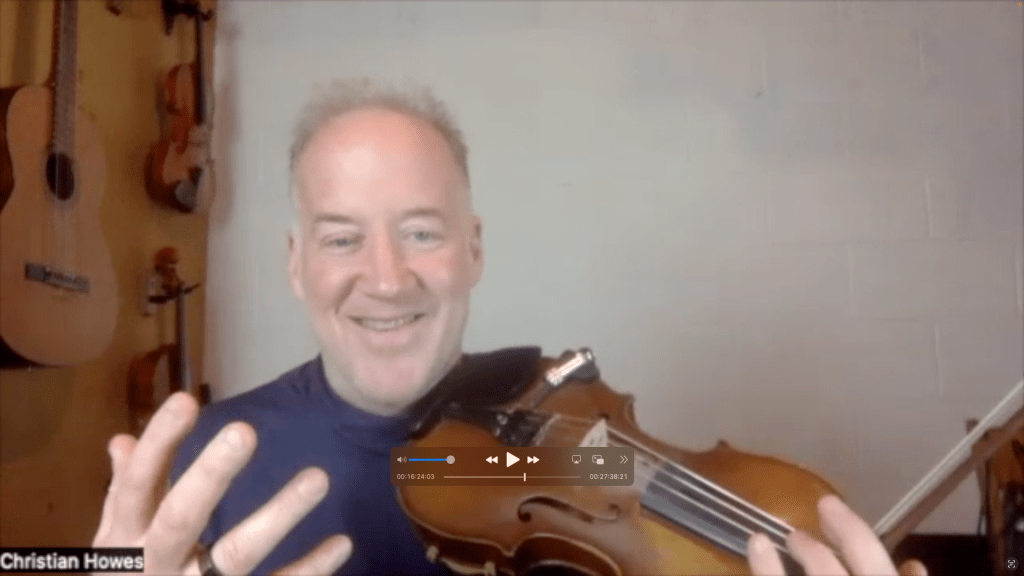
  • Learning How to Improvise: An Interview with Christian Howes – Violinist, Improviser, and Educator

    This is an interview with Christian Howes (https://christianhowes.com/). He is a renowned violinist, educator, and entrepreneur. He’s a classically trained musician who has attained prominence as a jazz improviser. Chris has developed a systematic and comprehensive approach to teaching improvisation, empowering musicians of all levels to unlock their innate musical creativity. He integrates insights from meditation and yoga into his pedagogy, adding a unique dimension to the learning process.

    This interview includes an overview of Chris’ methodology for learning to improvise, a demonstration of how he integrates meditation into his approach, and background on how he developed his philosophy and what effect it has had on musicians.

    The musical interlude features a fragment from this presentation by Dr. Susan Rowland:    • Jungian Arts-Base…   The music was composed and performed by Bradley Vines on alto and baritone saxophones.

    Unedited Otter.ai generated transcript:

    Bradley Vines 0:00
    Greetings all. Welcome back to another episode of the neuroscience of improvisation. I’m your host Bradley vines. And today we have a truly exceptional guest. Christian house is a renowned violinist, educator and entrepreneur. He’s a classically trained musician who has attained prominence as an improviser, Chris has developed a systematic and comprehensive approach to teaching improvisation, empowering musicians of all levels to unlock their innate musical creativity. He integrates insights from meditation and yoga into his pedagogy, adding a unique dimension to the learning process. Today, we have the opportunity to explore the depths of Christian house unique musical philosophy. Prepare yourself to expand your musical horizons.

    Speaker 1 0:58
    This program support exploring consciousness.

    Susan Rowland 1:02
    Absolutely. Absolutely.

    Bradley Vines 1:05
    Okay. Wow, this is wonderful. So delighted to have this chance to chat with you, Chris. Let’s just jump right in. You have helped so many musicians to discover and nurture their voices as improvisers I would love to know if you can share what you’ve seen in terms of the effects that improvising has had on their lives on them as people. If you have any specific examples, of course, that’d be amazing to hear about.

    Christian Howes 1:41
    Sure you work with a wide range of musicians from amateur, like adult beginners, and also like elite classical players, because it tends to be a lot of both string players. And, you know, it’s really coming out of my own experience from when I was young, and I was a classically trained player, but I felt really unsure about improvisation, I felt insecure about it, I felt like it was a complete mystery. And, you know, and then I just kind of beat myself up about it, you know, and I was either in denial about it or just beating myself up. And then sort of for a long time, I’ve been trying to seek the place that I think I’ve kind of family finally found, which is like just accepting myself for who I am and where I’m at as a musician. And so, lately, that’s been really what I’ve been focused on with the musicians that I help. And just seeing that a lot of them suffer from the similar things like they could be a totally elite, musician, classical musician, but they’re just really afraid about improvisation. And it’s not just improvisation, it’s like harmony. It’s like different stylistic languages or rhythmic contexts. So I actually break up these different things into separate problems. Because I think that when people try to improvise over a harmonic structure, or a rhythmic structure or a song, they don’t know, the problem is not improvisation. The problem is they don’t know that stuff. And so what I’ve been really doing is trying to help people with improvisation by giving them problems or situations that are easy for them to deal with, like, at their level. And what it does is, is when people go through that training, you know, with me, if they come to like my Zoom classes, or my retreats, or whatever, they they feel better about themselves, they have more clarity. And I think one of the central reasons is, because if you’re like a well trained classical musician, then and you can’t improvise, well, I think a lot of people, they make an assumption that it means they’re not a good musician. Like, if I’m a great musician, I should be able to improvise, I should just be able to hear my way to do it. But if I can’t do that there’s something wrong with me, or everybody’s gonna see that I’m a fraud, that I’m the fake. This gets to the heart of the problem, though, of us like putting our self worth with our musical ability, and then having these unfair expectations that we set for ourselves. So I tried to give people a process, but as a gateway to hopefully help them then feel better about themselves. And what I’ve been doing more than I know why I’m so interested in your work in the last year or two is actually using improvisation to facilitate a more meditative state and actually giving people like mindful prompts while they’re playing. Kind of like a yoga teacher would, or like a martial arts teacher or like a meditative, like. Guided Meditation would like giving them constant reminders to focus their intention on their breath on their body. And giving them just kind of like, I don’t know, mantras or quotes to hold on to so that they can show To develop a more self appreciation,

    Bradley Vines 5:03
    I was going to ask you about your your interest in meditation and how you’re integrating that into into your practice and, and teaching and mentoring of improvisers. So that’s, that’s amazing. You’re so you’re, you’re finding ways to give them cues to help that help maintain the state of mind. That’s, that’s free of judgment. And that’s involved in the music and, and spontaneous. Is that, is that the idea? Yeah, I

    Christian Howes 5:37
    mean, we can even try, like, if people are listening, if they have their instrument, like I even show you what I can even show you what it looks like. Right? Please. Okay, so anybody that’s listening, what I want you to do is you can either you can either sing, or you can play your instrument, and I’m going to try to guide you through a meditation just for like, one minute. All right. So take your instrument, or prepare your voice. And just before you start to play, I just want you to take a second ground yourself. Just breathe, just notice your breath. And maybe set an intention for what you want to do in the next minute. How do you want to feel? What kind of energy do you want to create? Is it peaceful energy? Do you want to feel more balanced? Do you want to feel integrated? Do you want to feel competent? Do you want to feel confident? Do you want to feel strong, just just think about that for a second. And now, in just a second, I’m going to ask you to choose one note. And I want you to just hold that note, in just a second, I’m going to tell you to just pick that one note, and then just play it. Okay, ready, take the one note and just play it for a long time, about 20 seconds, go ahead. And as you’re playing that note, I want you to just focus on your breath. If you’re, if you’re bowing your violin, just keep your bow moving. If you’re holding a note on the piano, maybe you just keep pressing the note whenever you want. If you’re blowing a note in your horn, maybe you run out of breath. And then you just play again. Just notice your breath. When you’re ready, change the note and just hold it for a long time. Notice your breath. Maybe notice your shoulders, neck. If there’s any tension in your face, just notice. If you want you can change the note again, change the note. Any note you want. You can notice your sound. Notice your intonation. Notice your vibrato. When you’re ready to change the note again, if you need to take a breath or take your ball off the string, go ahead and do so start another note. Hold that note. Notice whether you’re getting louder, whether you’re getting softer. And come back to your breath. And come back to your intention. And when you’re ready, stop playing. That’s an example.

    Bradley Vines 8:34
    Oh, that’s fascinating. Yeah, I was playing in my mind imagining playing a while you were doing that. And it’s amazing that the next note kind of just came to me. You know, I imagined the next fingering and the next note I wanted to play when you said now play another note. And then it just comes. It feels like it kind of connects with something natural. When you’re dealing with it that way. It just it’s happening of its own, you’re going with the flow and there’s no need to think hard about this. It’s just it’s what it what is emerging. So that seems like a really interesting way to move people into that state of mind non judgmental, open to associations and natural progressions that are going to emerge from their nonconscious. Is that kind of what you’re looking for. How do you? What do people say about this approach? And how do you think about it?

    Christian Howes 9:42
    Yeah, so I think there’s two there’s two parts of it. So one is I’m trying to develop this, this kind of language of an arc of like, a guided meditative practice, such as they do in martial arts or yoga, right. There’s these common prompts that people give, if you go to a yoga class, it’s like, notice where you are right now recognize that wherever you write are right now that that’s enough that you’re exactly where you need to be, you know, bring your attention, you know, bringing your attention to things and practicing, bring your attention, centering on the breath, you know, other little mantras that people say, I think are really helpful for facilitating that positive mindset. So that’s part of it, that I’m trying to learn that the other part of it with that I think as a kind of like a secret to giving people success with improvisation is specificity.

    Really, really limiting people’s choices. So I’ll give you an example like, and I think that jazz studies really blows it in a major way on a lot of levels, from a standpoint of bringing people into the fold. Not everybody, but as a general rule. You know, everybody’s heard about like the blues clinic, like the, you know, where it’s like, Hey, let me teach you the pentatonic scale. Okay, now, here’s a blues, and this is what it is. And now just use the notes in that pentatonic scale and just play whatever you want, right. And there can be some limited success with that, but I find it more often, there’s not enough specificity. Number one, it’s too much choice. So in my case, like in the case of what I just did, part of the reason that that works is because I said, pick a note and play it. Now. There’s a lot of specificity there, that’s very different than saying play whatever you want, and choose from this scale. So there will be other ways I could do that, though. Like I could say, like, you know, play one note recurring at this tempo. Or choose from these three notes and play this recurring tempo. So there’s a lot of ways that I find to give people specific parameters many, many more ways. And so those are kind of the two sides. One side of it is that I’m trying to give people these mindful prompts. The other side is that I’m giving them different what I call forms, elemental forms, where they can have absolute success and improvisation. In the same way that like, if you go to yoga, you’re doing poses, their forms, like standing mountain pose, is like literally like, Well, anybody who has two legs can do it. Right? Like you can just stand. And so it’s in that standing that then you can find expression, but it’s because you’re comfortable, because you know, you can do it. And it’s the same thing with down dog or like, you know, whatever the different poses are, like, I can’t do them well, but I can do them. And with that constant affirmation of the teacher that just like just breathe in the pose. You settle into a deeper sense of, of confidence and ease. And then when you practice it over and over again, you get better at it. So there’s no, there’s no need to be able to play giant steps. It doesn’t matter. I don’t know if I answered your question or if

    Bradley Vines 13:38
    I deviate too, Oh, definitely. And it does align with the research on the neuroscience of improvisation and that there’s evidence that even just subtle small changes can lead to significant changes in brain activity. So research looking at playing precomposed music that’s been practiced and rehearsed in a certain way, versus playing that that same music, but with in profit, Satori, mindset, or being more spontaneous, maybe stretching certain notes, or adjust the dynamics or introduce maybe a little grace note here and there. And just having that different approach leads to the change in brain activity that’s unique to the improvisation, Tori state. You’re getting to the point of recognizing that we kind of have these ideas that to improvise is to play complex music and very challenging music. Whereas actually to enter into these different states of mind, just very simple structures and contexts and changes can totally alter our experience.

    Christian Howes 14:57
    Yeah, and then you don’t want that things I do is I really separate learning from improvising. So like, you know, because, because if you want to play giant steps, or if you want to play blues or like, you know, then there has to be a lot of learning that takes place. But I think so many people, they try to improvise before they’ve done the learning. And so what I liked it, what I like to give students is like, Okay, here’s ways to like, learn material. And then here’s a process for improvising over in a context where you’re completely comfortable. Like, let’s say another, another student might be comfortable enough with like, the C major scale, in extended range like this is C, but I want to play C and extended range on the violin, which is here. Right, so let’s say a student is comfortable, if they are comfortable with that, that I might say, okay, so, choosing from just those notes, play in a recurring rhythm, you know, like, quarter notes.

    On and on and on. And I might ask them to do it for like, at least a minute, or maybe two minutes, because I think just like yoga, if you, if you do a pose for like, eight seconds, it’s not the same, you don’t really get the benefit unless you do it, you know, a lot, though, or longer. And so I’ll ask them to do something like that. But again, there’s many more variations. But they’re within their comfort zone. But a lot of times what musicians will do when I ask them to play like that exercise, is they’ll try to make like a melody that someone would sing or that they think we should be perfectly formed somehow, or that sounds like something like don’t play like, you know.

    Which I’m not asking them to make a song that sounds like a song with a chord progression. Like, I’m not asking that I’m literally like, and then I’ll tell them like, actually try to play the most wrong note you can, you know.

    Because then I feel that’ll actually open them up more, because there’s, there’s a tension that they’re feeling about, they’re trying to do something else. They’re trying to compose this, this masterpiece on the spot, or they’re trying to internalize some, like, you know, pre plan, some chord progression. That’s not the exercise. The exercise is to be in the form. You know what I mean? Like, in the purest sense,

    Bradley Vines 17:51
    that’s, that’s beautiful. And I really haven’t seen this anywhere. So this is this is your creation, this, this approach to developing improvisation? Or where did you learn this? Or come up with this?

    Christian Howes 18:09
    Well, I mean, I was really kind of wrestling with these, you know, you know, because because, because as a classical musician, the only all I had was like the things I’d heard, which was very melodic, as a violinist, but there was no harmonic understanding beneath it. Like I had studied Bartok, string quartets. And Krakoff even played all this like bearhug and stuff like that in orchestra like, plus obviously, Mozart and Beethoven and all that stuff. But um, you know, I heard a lot of this like, modern classical, just melodies I could I could find those shapes was a lot easier for me to just melodically. Listen for that. And I was like, I can’t get this harmony thing, especially with a single note load, mainly single instrument. It’s like, it’s hard to like, hear the song with all occasions. So I would just explore I guess what you might say is chromatic improvisation or 12 tone improvisation. Because I just wanted to find a way to just develop a language so but it’s been it’s been a long process to come to this point of a really refining like a method.

    Bradley Vines 19:28
    Yeah, yeah. It must because it’s, it does feel refined and kind of broken down to the bare bones of what is musical spontaneous, spontaneity, what is being present and being creative in the moment. And what’s necessary for that the most basic elements that then have within them, all of the magic that you can experience at any scale. of musical creation. So I find that really fascinating. And how does your method does is is that where I mean, I can imagine just being there? Is there a trajectory to the learning where the forms enable people to your people that are learning this approach to improvise together? And how does it build? Yeah.

    Christian Howes 20:30
    Well, absolutely, like so what’s interesting about this is that I’m glad you asked that question. Because like, Well, there’s two kinds of building I guess, in my mind, because if the question is, well, how do you build from that into being able to play giant steps? The answer is, you take separate time where you’re just learning material, like so for example, like voice lead practice voice leading to chords back and forth, you know, really exhaustively until you can do those, and then you can improvise over that small amount of material, which like, you know, the pianos Bill Evans famously talked about that he would just had a very small amount of material and for an hour, he would practice, that’s what he would practice, he was practicing a very small amount of material. But when you separate learning from improvising, and it’s just like, Okay, now I’m practicing, you know, voice leadings. That’s memorization. And actually, you know, if it’s like, okay, I have 15 minutes that I’m working on voice leading. That’s pretty doable, then I’ve got 15 minutes that I’m doing improvisation. On something that I know really well. Whether that’s a out of a key signature or not, whether it’s over like a simple chordal voice leading pattern or something like that, or a rhythmic pattern. So that’s, that’s one way that we build. But also, in this process of this mindful improvisation we’re trying to reinforce for people that don’t try to be somewhere where you’re not be where you are. And be like Victor Wooten said in the music lesson like second chapter, he said, Never lose the groove in order to find a note. And the discipline of playing within your means everybody’s trying to, like, play faster, or be more complex or be more interesting. And it’s like, no, you’ll be so much more musical, if you just take less chances, and do what you can do. Well, everybody knows this, like great musicians know this, right? So just reinforcing this, like, don’t quit trying to be somebody you’re not except where you are. And, and, and, and have a state of peacefulness, when you’re playing, have a state of competence of restraint of discipline. And some of the things like like Bobby Floyd, who is a great B three organ player and jazz pianist who toured with Ray Charles, he’s a legend, University of streets, Columbus, Ohio. One of the things when I when I was learning from him was that, like, every note he plays is in rhythm. So for example, like I will set for myself, if I’m improvising, I will set as one metric, or even the only metric. It doesn’t matter what I play, but every note I play will be in rhythm. And if I adhere to that standard, like it’ll be in time, right? If I adhere to that standard, it means that I have to not play. And so holding people to not playing is actually more important than you know. But if you could say the same thing about playing in the changes, or playing complete phrases, or playing with a good sound, or whatever, it’s like, whatever standard, you’re going to hold yourself to have the discipline to not play, and unless you’re going to play that way. So that’s one side of building. But the other side of the way I would answer your question is like, you can have two people play free notes together. And it’s very, it’s very interesting. Like I can pretend to be two people and say, well, both people are going to play together in time, just random notes.

    And if two people do that together, and they’re listening to each other, like It is musical is beautiful. And the reason why is because they’re playing together. They’re matching their sound, they’re playing in tune. There’s a human intention, there’s a unity with it. So that’s already building music that’s totally spontaneous. It has a form. And it’s enough. It’s enough. Just like if you see a tree out your window, that tree is enough. The tree is not lesser than the other tree on the other side. It’s just a different tree. But it’s beautiful. It’s it’s, as you were saying, like a found object. Maybe that was the our other conversation.

    Bradley Vines 25:36
    Absolutely. Okay. Well, I mean, it’s enormous and enormous grocery store of food for thought. And, and I think it’s really great, what you’re doing. And so how can how can people get involved in learning through your method? And I know you’re, you’re on the East Coast, more or less? And do you have a presence elsewhere in the country? Or is that all done via online interaction? Or how do people connect with you and, and take part and learn from you?

    Christian Howes 26:15
    Yo, thanks for asking. You know, I’m in Asheville, North Carolina, but, but I do a lot online. I teach a lot of people online a lot of different ways. One thing I recommend people do is go to my YouTube channel and just play with my free play long videos. I’ve got hundreds of play free play long videos, a lot of them are like play after me. So I’ll play like a short phrase. And you can play it back after me. I have in different styles, different different levels, so easy to advanced. And, but I also do zoom classes where I’m guiding people through improvisational exercises over seven weeks, take him through my whole curriculum. So you can go Christian house, you can find me there, you can go to my YouTube channel, Christian house.com, or YouTube. Probably the easiest way to go to my website, Christian house.com. Thanks for asking.

    Bradley Vines 27:01
    Yeah, absolutely. And thank you for sharing that and playing as well. What a treat. I love your playing on your podcast episodes, what you share. The musical excerpts are always wonderful here to hear. So it’s great to hear it live. Indeed. Okay, wonderful. Well, thank you so much, Chris. It’s it’s a real pleasure and an honor indeed to have you in conversation so much. Appreciate it.

    Unknown Speaker 27:35
    Appreciate you. Thanks a lot, bro.

    Transcribed by https://otter.ai

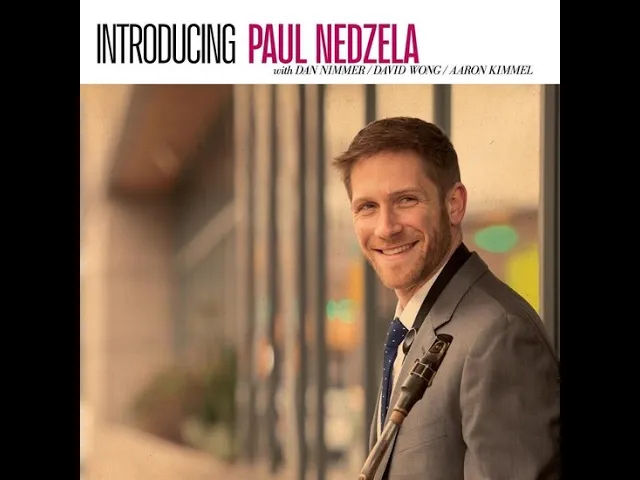
  • The Nirvana of Improvisation: An Interview with Paul Nedzela – Baritone Saxophonist and Composer

    This is an interview with Paul Nedzela (https://www.paulnedzela.com/). He plays baritone saxophone with the Jazz at Lincoln Center Orchestra and leads his own quartet. He shares his thoughts on the experience of improvisation, how to prepare for a performance, the relationship between musical development and the various states of mind occasioned by improvisation, and several other topics.

    0:00 Introduction
    2:23 Describing the ideal state of mind during improvisation
    4:46 The role of judgment (or lack thereof)
    5:51 Examples of music that is perfect because of its imperfections
    7:15 Pushing boundaries during improvisation
    9:04 The role of adrenalin and nerves in improvisation
    9:56 Managing performance anxiety and stage fright
    10:58 The state of total involvement
    12:00 The absence of ego
    12:57 The effect of practice on the experience of improvisation
    14:03 Engaging with the meaning of the music being performed
    17:05 Emotion and the intellect in jazz performance

    Unedited Otter.ai generated transcript:

    Bradley Vines 0:00
    Greetings all Welcome. Today I have a special treat for you. It is an interview with the fantastic baritone saxophonist Paul Nedzela. He is the very player for the Lincoln Center Jazz Orchestra, and he’s also a bandleader himself. He recently came out with his first album as a leader, Introducing Paul Nedzela, I believe is the name of that album featuring his quartet. It is a fantastic listen. So this interview was taken in London, I was based out of London and had the opportunity to study with Paul, when he would come with the Lincoln Center Jazz Orchestra to play at the Barbican Centre. And during one of these visits, we had this chat about the nature of improvisation. He has some great nuggets of advice, ideas about how to approach improvisation in order to make the most of the opportunity, and what he sees as the most compelling experience that’s possible through improvisation. I was very happy to be editing this not long before, a big band performance that I had. This was very inspiring for me. And I hope you’ll find it to be inspiring as well. Here it is: an interview with Paul Nedzela. Apologies in advance for the audio quality. This was taken in a cafe. There was quite a bit of background noise of trend. They have been that a little bit, but you may hear some clinking of glasses and silverware and also some background music. I hope you can focus on what Paul is saying words of wisdom from someone who’s doing great work in the world of improvisation. The idea

    was to see if you have one or more examples of an anecdote, something that happened and experience that was particularly remarkable,

    Paul Nedzela 2:13
    just in anything having to do

    Bradley Vines 2:15
    with improvisation. Just let you talk about Yeah, what you think about it, first of all, and can build from there. Sure.

    Paul Nedzela 2:25
    Yeah. So I think about a particular anecdote, but I definitely remember so I talked about it with my dad, my dad used to be a musician, too. He was a bass player. He, he kind of stopped playing before I was born, though we things got a little tough for him in the 70s when things were going electric, and he just kind of didn’t practice enough stuff like that, he said, so anyway, he used to tell me though, about those moments of like, feeling really, like when everything was kind of clicking, and just reaching those moments, and he would feel this supreme confidence, and like elation, that he would talk about that that would hit him in those moments of just like everything being super easy. And you know, when everything was working, but we had talked about it for me, it’s a little different when I’ve reached those moments, and it’s always the goal. Rather than feeling really confident that most I feel his total loss of ego or thoughts about anything else, besides the present moment. That’s, that’s really like, the goal is for me is to be totally interested inside exactly what’s going on. And to kind of lose that, that thinking part of my mind, which is usually present. Not that it’s bad to think or anything, but usually, those are the best moments. For me to, I don’t know, those tend to happen more. When I’m not trying as hard to achieve them. You know, it can be when I’m not trying to impress people or stuff like that. So the more I’ve gotten comfortable and confident playing, it’s easier for me to get to that state. But it’s hard to say sometimes from the outside. You know, I never know, I can have a time when I felt pretty good. And I listened back and picked me up. Okay. And then other times when I thought it was like really bad. Or just like total miss and listen back and I said, Oh, okay, I thought you know, it’s not really that bad.

    Bradley Vines 4:36
    So there’s this mismatch between your internal sense of what’s right going on and then what’s happening. So

    Paul Nedzela 4:46
    I think that’s just like the judgment stuff that goes on with a lot of us anyway, you know, we’re super self critiquing. But there’s something about I don’t know for me, it’s like whatever. Fradkin more is less. Less judging, maybe more more critiquing, rather than genuine. So not taking it personally, even when I don’t do anything when I want it, or I fail doing mesocycle still just music and just messed up whatever he born with. And you know, it doesn’t mean you’re a bad person, when you mess up, or whatever thing is, right, it just makes you messed up to the music and little choir. Yeah, gotcha. And listening to some of the great recordings, honestly. Some of the best moments are when a guy misses. Like you can hear they’re reaching for something and fail, and their humanity comes through or like really clearly.

    Bradley Vines 5:47
    So what’s an example of that? Thinking?

    Speaker 3 5:51
    Oh, Miles, Miles would be a great example. I mean, his chops got weaker and weaker for a good period when he was just, you know, heavy into drugs, cracking notes, super out of tune, you know, chops kind of shaking and stuff like that. But I don’t know. Every note had meaning even when he missed it, you know, just like fluffing stuff around be anything. Like the Stella by Starlight recordings and stuff like that, or even some of the stuff we did with the elevens. And it was kind of missing it with the big band stuff. Train two, for sure. I mean, certain guys, you know, just squeaking away here and there. And it’s like, man, it’s just so raw and awesome. But then there are other examples of guys like well, maybe like George Coleman, for some, just thinking of that era, I guess, coming from train. He was like so much more. I don’t know, clean in a lot of ways. He’s an amazing player, too. But sometimes I didn’t hear it in the same way.

    Bradley Vines 7:04
    Sure, you know, since then

    Paul Nedzela 7:06
    you’re pushing. Yeah, that reaching are going to be out of reaching? I don’t know if that makes sense to you. Yeah, for

    Bradley Vines 7:15
    sure. I mean, I was interested, when we’re listening a short discussion last time, you said that you actually feel physically the intensity. At those moments, there is I think the jazz musician is experiencing crisis is pushing those boundaries, and everyone is being transformed with the person as they’re facing either, you know, succeeding, or like you said, it’s also he meant to break through at that moment, but there’s the potential right there for for something to happen. That’s magical.

    Paul Nedzela 7:53
    Yeah, yeah. Sometimes, I mean, they’re, like, you can kind of hear those moments in solos. I mean, it’s kind of a technique at this point, but where the, the rhythm section will, you know, either they start playing a kind of hemiola or something like that, you know, what I mean, where it’s, there’s some kind of off of the right, you know, away from the walking or away from the time. And, you know, you can just feel the tension build or whatever, until the pinnacle, when they all decide to start swinging again, and the audience, you know, always recognizes that as a moment, right. So it’s true. But there’s also like the question of, are they going to, are they going to come back in together? Sure. Right. I mean, that’s part of the thing. I think that if people register, it’s like, it was like, trying to go for something and the tension is building and can they make it work together? And when it fails, it is not nearly you know, it’s not the same thing you’re like, okay, yeah, that transition to you know, yeah, but you don’t hear it. It doesn’t register in the same way.

    Bradley Vines 8:52
    Right. Yeah, absolutely. Yeah. That’s true. So it’s, it’s like building is becoming part of the vernacular. Right. And being able to take it into those ambiguous places. Sure. Bring it back.

    Paul Nedzela 9:04
    Oh, yeah. I did have Yeah, the physical stuff, though. It was just Yeah, adrenaline for me. Yeah. That would, that would get me bad sometimes.

    Bradley Vines 9:12
    The adrenaline just the intensity of the moment. Yeah.

    Paul Nedzela 9:15
    I mean, you know, nerves and. And everything. Yeah, sometimes I would surprise myself and how I play through it. And other times, I would totally psyched myself out. You know, in a part that was I knew it was gonna be a little risky. Yeah, so I just try to you know, really work on those things as best you can. classical musicians to deal with that stuff. I mean, really bad. The way that they have to prepare themselves for moments of intense nerves. mind boggling, at least jazz musicians kind of accept mistakes allow one. So

    Bradley Vines 9:56
    that’s good. How do they know classical musicians do it. Do you know much manage with that?

    Paul Nedzela 10:04
    Well, I don’t know that much. I know that, you know, those, the whole audition process is, you know, really difficult. A prepare, you know, those few pieces, whatever it is five to 10 pieces just for months, you know, for this one moment. You can use mental tricks. And these I’ve done that, too, when you’re practicing to imagine yourself in the situation that you’re going to be performing.

    Bradley Vines 10:33
    So why do you think that that state? Going back to what you’re saying about that state of total involvement? Why is that desirable?

    Paul Nedzela 10:47
    Why is it desirable? You mean, for me personally?

    Bradley Vines 10:51
    For others for you, for you. You actually said that’s the goal state? Yeah. No. Why do you see that?

    Paul Nedzela 10:58
    Yeah, I mean, for me, I don’t know. I, I really feel like part of it is just like that state of nirvana. For me, like, you know, you’re kind of reaching a different, I don’t know, it’s like, total peacefulness for me. And it’s just like, just being able to be creative from that place. I mean, it’s like, real, I don’t know, it’s just like, comfortable. And exploring and all these things in a totally just just three way. Firms, you know, that’s the way I experienced it. Everyone doesn’t jump. That’s interesting. Because when, way better to just waste. But yeah, sorry.

    Bradley Vines 11:44
    Just saying that. It’s like, a loss of sense of self. It’s like a negative thing. Not negative, but something’s missing, you know, the self is. But why is desire? So you’re saying that actually, there’s something that comes with that?

    Paul Nedzela 12:00
    Yeah. I guess, maybe it would be really the loss of self by ego. As most of you know, I know. It’s like a kind of a subtle distinction. But you’re still saying everything you want to say. It’s just without using ego, like the Freudian kind of ego, gotcha. Teaching the judgment. Am I good or bad? What are other people making money? Or even like, how am I making it from this bar to that bar, something like, you know, what am I doing rather than? I mean, it’s such a higher level of playing anyway, I really, sometimes people try to just get to that point, honestly, before I feel like they can even play at all. That’s, that’s why I think it’s better. Yeah. You still couldn’t

    Bradley Vines 12:57
    happen more often. So when practice talking about a relationship between this and expertise? Did you have glimpses of this before? And then it’s become more frequent as you

    Paul Nedzela 13:11
    go through phases? Yeah, I mean, more than when I was not as great. Yeah, certainly, yeah. But I’ve had phases where it was happening more often. I mean, sometimes it has to do with how much small group playing I get to do. And in an improviser, you know, if I’m in the big band, it doesn’t happen as much. So if you only get one solo a night, it can be hard to kind of just automatically turn that on for one minute, if you can’t, but every now and then, you know, like, certain we get, like valid features every now and then. And those would be those moments of like crises that we were talking about, right? The adrenaline was hit, or maybe not as much, or I would think about, you know, what the piece meant, and try to get into these different states for me.

    Bradley Vines 14:00
    What do you mean by what the piece meant? That’s interesting. Oh,

    Paul Nedzela 14:03
    well, I mean, what’s the what’s the intent? So I mean, it’s another level of playing, right? Yeah. And again, writing notes and stuff like that. If you’re playing a song you know, you can change the intention of whatever the composer was trying to do, but I guess there’s an idea and it’s easier for me on certain pieces. It’s really clear, it’s like, okay, there is a clear like, Western, you know, or like deep longing and sadness going to the sun. Now, do they start playing a whole bunch of like, just maybe cliched. You know, like surf blue stuff, or you’re just throwing in all them two fives, you know? You might sound great in terms of what you’re able to do on those changes, right? But you’re not, you’re not playing with any of the feeling that the maybe the piece is actually sometimes it happens all the time with good players. I don’t know, I’d rather can’t always play. There shouldn’t work. So sometimes I’d rather like okay, let me try to provoke some emotion, you know, evoke emotion and provoked. So just thinking about that

    Bradley Vines 15:32
    makes me think of this tradition of singing. That’s part of a tradition or an indigenous tradition in northern Nordic countries. It’s called yo King. Yeah. And they, they will embody certain creatures, like there’s a whole song. Oh, yeah. And then it’s it’ll be like 2030 minutes of this guy kind of exploring what it is to be wirelessly, but it’s musical. Right. But the definitely the tambor changes in certain ways and you get this feeling it’s almost like that was part of this traditional communities and indigenous communities playing or becoming, it goes back 40,000 years, like the cave paintings of men becoming animals, right half lion half and things like that becoming of something that’s imagining you or someone else or empathy or a creature that you’re tracking. Like, you know, this. Warriors are the hunters and in Africa, they still do the persistence hunting, they can pretend that they’re the animal and they surviving. What would I be if job were that? Yeah, exactly. becoming something and then

    potential as Yeah, totally. So human, right.

    Paul Nedzela 17:05
    Yes. seeking out other potentials. Transforming. Yeah. Yeah, it’s not really evolution, even necessarily, but it’s just yeah. I don’t know. It’s, it’s another level of my, which sometimes, you know, jazz is so long. It can be intellectual, which is great. I love it for that, too. It’s complex compared to a lot of other types of music, you know. And I think sometimes that can maybe, you know, you can lose the intent or purpose of certain music by only focusing on that. And I mean, I’m really not bad mouthing that stuff, because I love intellectualizing music, too. It’s like, those are two great sides of it, you know, but that’s one of the great things about dads and you can have both and, and just in a moment. Sure. Yeah.

    Bradley Vines 18:11
    It’s a great tradition. Yeah. Well, thanks for your patience to the tradition. And chatting about this. Yeah.

    Paul Nedzela 18:20
    No, I’m happy to I mean, I mean, I don’t know if that’s what you were looking for. It’s perfect.

    Bradley Vines 18:25
    Perfect. Yeah.

    Transcribed by https://otter.ai

  • Improvisation and Meditation: An interview with the saxophonist and composer Prasant Radhakrishnan

    Prasant Radhakrishnan has a background in Carnatic Indian classical music and Western musical traditions, including jazz improvisation. Prasant is a protégé of the legendary Kadri Gopalnath, who revolutionized the role of the saxophone in Carnatic music. Prasant’s performances traverse the realms of traditional Carnatic concert programs while also blurring boundaries with his VidyA ensemble and other collaborations, featuring instrumentation from the jazz tradition. Moreover, he embraces music as meditation, bringing forth unique philosophical perspectives through his artistry and teaching.

    The interview covers the following topics:

    • Prasant’s experiences with Carnatic and jazz music
    • His approach to improvisation across these musical traditions
    • Experiences with his guru, Sri Kadri Gopalnath, and related insights
    • Methods for learning to improvise
    • Integrating meditation and music practice (including a demonstration!)
    • Blending Indian and Western music traditions through composition and performance
    • Breathing techniques for self-awareness
    • Dreaming and improvisation
    • Comparing the relationship between the Carnatic and jazz traditions and mind-altering substances and addiction

    To learn more about Prasant Radhakrishnan’s music, teaching, and performance activities, see his website:
    https://prasantmusic.com/

    Unedited transcript by https://otter.ai:

    Bradley Vines 0:00
    Greetings all. Welcome to another exciting episode. Today we have the privilege of introducing an extraordinary saxophonist who seamlessly blends the worlds of jazz improvisation, and Carnatic Indian classical music. Meet Prashanth rather Krishnan, a protege of the legendary katri Gopal Nef, who revolutionized the role of the saxophone in Carnatic music. Per Sean’s performances traverse the realms of traditional Carnatic concert programs, while also blurring boundaries with his video ensemble, featuring instrumentation from the jazz tradition. Moreover, he embraces music as meditation, bringing forth unique philosophical perspectives, through his artistry and teaching. Prepare yourself for a captivating journey through the innovative sounds and insights of Prashant Radha Krishna. Welcome, Prashant. Thank you for joining us.

    Prasant Radhakrishnan 1:02
    Thank you, Bradley. It’s great to see you. Great to be here.

    Bradley Vines 1:08
    Wonderful, could you please provide us with an overview of your background and how you would describe yourself at present?

    Prasant Radhakrishnan 1:18
    Well, and context of what we’re talking about, I mean, there’s so many things that we could look at. And, and at the same time, I think it all really just to just living life as everyone else, as we all are. But my background, of course, as you mentioned, so, so kindly, is, is really mostly in music. And I was exposed to music really, from a young age, just like many other musicians, especially Indian music, starting with Indian budgets, like group budget singing is something that happened in where I grew up in Phoenix, Arizona, and then also Indian classical music, but grew up here in the US. So I was exposed to jazz, school band, Western music, everything all at the same time. So musically, that was kind of my background is just being steeped in all these different traditions at the same time. But I was lucky to go and studied music with my musical guru, Shri Khatri, Gopal, not in India, when I was a young teenager, and that got me much deeper into the Indian classical traditions. And, you know, the journey just kind of continued from there. And after some years ended up doing music, as a full time, life path, so to speak. And that just kind of revealed everything, as a lens, or as a way of being in general. And so, you know, I’m just lucky to have that as my way of being here, through music.

    Bradley Vines 3:08
    And over the course of that development, how did you find the Carnatic tradition and the jazz tradition worked together or independently to influence your approach to music, but improvisation, specifically, and how have they shaped your musical experience?

    Prasant Radhakrishnan 3:34
    I mean, so much, they both, as we said, it’s both independent. And together, because I was exposed to them simultaneously, pretty much growing up. So I started getting more in interested in music, as I got a little bit going through grade school and middle school. And that’s kind of when you get exposed to jazz. And I started studying with my Carnatic music teacher around that same time. So it was interesting how, how they both were brought in at the same time, I did end up studying Carnatic music a little more intensely, thanks to my teacher, you know, training me, but I was still exposed to jazz all the time. So they were both kind of going into tracks kind of in different ways. But I would always notice that whatever I learned at Carnatic music would benefit what I was doing. And on the western side of the of things, whether it’s jazz or just playing ensembles, and vice versa, the stuff I learned in the jazz tradition, especially listening to the musicians, and their sound, especially on my instrument, which happens to be the saxophone, hearing the great players in the jazz tradition, because there’s so many great ones. Whereas in Indian classical Carnatic music at the time, there’s really only my teacher was only one doing Get on the saxophone. So hearing more input of the type of sound you could get on the instrument was really helpful. And over time, they kind of started to merge together, the longer I lived with both of these traditions. First, I was interested and combining them and but I started to just hear music that combined these two. And so then I would be interested in how to combine them. But eventually it sort of that melted away as well. And then just kind of left with a common ground, which is actually quite large, there’s actually a pretty large common ground there. So that’s kind of how, where it ended up to some degree.

    Bradley Vines 5:47
    Amazing. And it’s a journey that continues. This is a process in progress, of course,

    Prasant Radhakrishnan 5:54
    pretty much yeah.

    Bradley Vines 5:56
    How does your experience or approach to improvisation differ? comparing your more traditional Carnatic performances and that setting? And the more boundary blending approach that you take, for example, with your video ensemble?

    Prasant Radhakrishnan 6:22
    That’s, that’s a great question. They’re on some level, yes. And in some level, it’s the same. So I’m one level there, I do see a difference. Where, just the, by the way, the music is applied. So in Carnatic classical music, there’s already that’s been set for us by previous generations of master artists, the way that we approach the concert structure, and where the improvisation goes, generally how that improvisation unfolds. So there’s quite a bit of freedom. But there’s also quite a bit of structure to that freedom in Carnatic music. So you kind of know, when you can be in complete freedom and other parts, you have to be watchful to be staying within that path, you know, it’s kind of like driving the car on the road, versus maybe being in a huge field where you can just drive anywhere you want, as an example, but in combining Carnatic music and jazz, for me, the context for that has always been my own original music. Cuz I started that journey of, you know, combining these traditions. Really, just like I said, before, just by seeing it, the common ground and the compensations that were arising for me. And so automatically, the context was different. Because in that context, I was able to create whatever I wanted to come out, and the context gave me more freedom, I would say. So, at the time that I was doing more of those compositions, I definitely there was an interest and you know, bringing the best and, you know, combine them in a very tasteful way and things like that. But at the same time, it was very spontaneous. So on one hand, you had the technical side of combining these two traditions. And another hand, we were able to create spaces and those compositions, were actually did feel a little bit more free to improvise, compared to some situations and kinetic music. So because you no longer have a particular thing that you have to do, but you’re actually setting up a space for something that you can do and explore. So that, you know, adhering to particular cycles in particular times, it was a little bit different in those original compositions. So that’s kind of the difference. I noticed.

    Bradley Vines 8:55
    Can you take us into your compositional process so so these different terrains, that you’re creating the structures in which you can launch your improvisations? And that bring together your knowledge? How do you come up with those you said, you started to hear these compositions, how do they come to you just introspecting upon the process by which they emerge?

    Prasant Radhakrishnan 9:28
    Well, each that’s also a wonderful question that I think a lot of composers will also probably say that it’s, it’s a mysterious process. But for me, my earliest compositions and I think this is still the case, that it it did spontaneously arise for me so I would usually actually start hearing the song almost like you’re hearing anything else, but it would be either fully formed or would be like 50%, or three quarters formed. And from there, I would take that, and then continue with it until it, it was something that we could play. So I remember the very first song that I wrote for Vidya, which is called a cent. And we played that for many years. And as always, kind of like one of our fun, fun tunes that we’d play. That song was pretty much, you know, it’s a 95%, I just heard that whole song. And then, including the bass line, and the rhythm and everything like that. So I can’t really say it was much scale on my part. I just like at least heard the song and then tried to work out any other details to bring it in to, you know, the actual physical manifestation of it. There are other times where I would have a piece of it, that would be very compelling, I would start hearing things, hearing a particular bass line or a particular groove rhythm, and then put those things together. And then as I would work with it, the rest of it out here, the rest of it. That’s, that’s like most of my compositions there. There are a few where I felt, let me try something like this. And, you know, maybe I want to do a particular group or a particular Braga, for example. So I found that the same thing. So I would start with a little tidbit. And then once I start working on it, the rest of it would show up. So yeah, so that’s mostly been my process,

    Bradley Vines 11:34
    and mysterious expression of the inner workings combined with craftsmanship, of course, and musicianship. So and in video, your fellow musicians, are they all as well versed in Carnatic and Western more jazz oriented music? Or is there more variety in terms of their experience, and, and expertise,

    Prasant Radhakrishnan 12:09
    there’s definitely more variety, which I actually think was was very cool for what we were doing at the time. We had. Like one thing that was cool. For example, Samir Gupta on the drums, was very proficient and Tabla. He was studying North Indian classical Hindustani music on a tablet. But he was also a great jazz drummer, and had a lot of really wide, wide range of influences musically. And David was against as still as they both are very active on the scene. Great jazz bass player, and also very, very open terms, just his ears and heart and everything, hearing the music and, and really responding beautifully. And David, we would work together, getting some of the subtle Indian classical gammak as the ornamentations. And he would actually play them on the bass, like a violinist so there was just that trio. And at one point, we had a violinist who is at a chromatic background as well. But even on the acoustic bass, he was able to make both the role of a bass player and a jazz trio and at the same time, a chromatic violin as to shadows and shadows, the artists like in Carnatic music concert. So that was a really interesting instrumentation interaction. They’re

    Bradley Vines 13:40
    wonderful, amazing at what is the significance of the name for this group? Video, How did you choose that that name,

    Prasant Radhakrishnan 13:51
    videos generally is just you could say it’s a it’s a path of knowledge or its path of inner knowledge. Some you may call it like a divine knowingness, divine knowledge. And we came across the name just I think my sister actually, we were brainstorming and also band we were all brainstorming different names. And this is one of the names I think my my sister actually submit that suggested it, but I don’t remember how to present and it just kind of felt right. And so we we use that name, and it just kind of stuck with it. So this video so far, recently haven’t been performing as much because we’re all in different places. But, you know, we might get might get it going again, hopefully, if we can make it happen.

    Bradley Vines 14:44
    Splendid, would it be possible to share some standout experiences where improvisation took flight or you had you had some kind of interesting experiences? Can you share Are that memory that has made an impression on you.

    Prasant Radhakrishnan 15:06
    For me, it’s improvisation kind of almost like you’re saying, like a peak experience, while improvising, a lot of jazz musicians have talked about that. For, for me, it was, I didn’t have one in particular, it was really just an overall build up over time of continuously having that experience. So for me, improvisation, at least in the aeronautics side, which is what you know, it’s taught from my teacher that came really naturally to me for some reason, what they call it, the sweater Kalpana. And I got that, and I think that’s, that’s thanks to Kathy dieser, because I learned with him sort of a mixture of the older apprentice style, and the more modern sort of taking lessons because I didn’t live with him for 12 years, like they used to do in the old days, but I did stay with him during summer, and winter breaks. And so because of that, I got to travel with him and just be on the concert stage with him. So all the concerts, I would just be sitting there. And then eventually, it was also kind of playing along as it as a just a support. And so I think I was able to pick up on just the feeling of what it feels like to improvise in the moment. And so I always did feel very, a lot of enjoyment and freedom and just peaceful exploration. During improvisation, I had never really felt that pressure. I work with a lot, you know, music students, and some of the things they they ask about are like, oh, like, you know, like, I’m not sure what to play or something like, I don’t know what to play next, or I keep playing the same thing. And there are solutions to those. But those are things I only thought of after teaching. But as as far as planning is concerned, I did feel like once you enter that space, it is like you said, it’s like take, it’s kind of like taking flight, where the conscious thinking mind sort of disappears. And you’re going, you know, just in a natural state of flow or state of being. And you’re just witnessing an unfolding of of how the music is coming out. And it’s always kind of a surprise. And you know, sometimes it doesn’t go the way a concert might expect it to go if it doesn’t land perfectly or something. But most of the time, it goes pretty well. And it’s it’s always a surprise to see how that unfolds. So for me, it’s really been, there are just, I think too many experiences of those. It’s kind of just build up over time and an overall appreciation for how something like improvisation can give us back our own natural feeling of spontaneity, and just being ourselves. I think that’s that appreciation sort of stayed with me over time.

    Bradley Vines 18:13
    Beautiful, that is kind of idyllic perspective on approaching improvisation is something that builds naturally and what more can you ask then for the demonstration of what it is to to play to create did st Khatri go will not ever share anything specific about improvisation that you recall? Did he ever give you a you know, some kind of insight that that stuck with you?

    Prasant Radhakrishnan 18:48
    The funny thing is, that’s a great question. He didn’t really say too much. So I think I have to thank him for that. That proximity of being listening and playing with him. I do remember the first lesson. Like when we were together, and he was just teaching me normal, some compositions. And then he just said, once he tries photocopied, I just start playing. So Hamsa 20 Is that raga, which is, you know, it’s kind of a derivative of, like a pentatonic within the major scale. It’s a very, it’s a pretty easy to get on saxophone. So he said, play helps with any, you know, so I was I just started playing something. I’m like, I didn’t know what he wanted me to play. He’s like, just play, play play. So and then I just started playing some stuff. And then I remember feeling like, I don’t know what I’m doing. This doesn’t sound that good. And he was like, Yeah, that’s right. Keep going, you know. So he just wanted me to get into it. You know, just it didn’t matter what really I was playing. He just wanted me to get into that jump in and to just playing and not worrying too much about it. So I think his teaching approach at When it came to improvisation was was really good. And I think that’s, that’s probably how I teach too, because of him that it’s, it’s not a restrictive approach, I studied with other people that he, when he was, for example, out of town or something he would say go and study with, you know, for example, trs or and some other musicians and I had some mentors, who, who I would just meet. And I noticed that some of the other teachers were more restrictive in the process, they would say, like, okay, play this, and then play this, and then learn this, and then, you know, build on that. And I was, and that works, too. And that’s very useful, too. But I had come from the complete other side of it, which was just to start playing, and just just see what happens. And I feel like that’s, they’re both important, but I think that just start playing naturally and see what comes out and then sculpt it is I think, what gives people that feeling of freedom, and being able to enjoy improvising, and be able to enjoy playing from the get go, rather than having to create the mold and then break it. You know, it’s feel like it’s easier to just improvise. And then you can sculpt it as you need to as you listen more and more and get more comfortable.

    Bradley Vines 21:22
    Fantastic advice for improvisers, people learning to improvise or deepening their practice of improvisation taking what’s happening naturally. And then molding or exploring that expanding? Altering? Yeah. That’s, that’s lovely. It could you delve into the connection between meditation and improvisation music more generally, how do they intertwine in your approach, as an artist and as a person?

    Prasant Radhakrishnan 21:58
    Oh, for sure. Yeah, they very much intertwined. It’s the way I feel it is that, you know, meditation is really just another word for describing our own nature, which is, you know, just the feeling of being or the feeling of pure awareness. So, when we, so a lot of times, describe meditation as an activity of focusing on an object or focusing on a practice, but, but really, another way of looking at is that meditation is when you, you sort of withdraw from all the practices, and then you just rest in your own feeling of being, which is what’s natural to everyone. That’s the, that’s the one thing that’s the most natural to all of us. So when we see meditation as more of the foundation of what we are, before everything else arises, then we can, it’s really more of a resting. And, and then the spontaneous, spontaneity is kind of a natural byproduct. Because, you know, and that feeling of just being then things just happen naturally. So in that way, the improvisation is the most natural thing there could be in that is spontaneous, and also that it arises on his own. So as I was saying earlier, the other jazz musicians, many, many people have talked about, oh, I’ve had a moment where I was just like, everything was just happening. I wish I could get back to that moment when they were playing their solo and everything was just happening. But and that’s actually how it really is. So when the when the thinking mind isn’t there, then we get to enjoy that. So that’s the way that I look at it is that the meditation is the foundation. And the the improvisation is a natural, like kind of a wave arising out of the ocean of that. But I do understand that not everyone sees it that way, in the beginning, and I didn’t always see it that way. It’s more of over time you discover it to be that way. And the improvisation approach can merge very well with a meditation practice. And so if you’re meditating, for example, to continuously let go of the thinking mind, for example, it’s a common approach and resting and a feeling of awareness. You can do the same thing when you’re improvising. And then also because improvising is an activity, a lot of people are much more comfortable with some kind of an activity rather than just just being. So through the activity, you can also discover that you’re just being or you’re simply aware or witnessing while you’re improvising. And then that again, benefits the meditation and then throughout the day, it becomes a natural feeling of just experiencing arising of experience.

    Bradley Vines 24:59
    Would you you be so kind as to demonstrate this process of revealing the natural state of the mind through the practice of creating music and improvisation.

    Prasant Radhakrishnan 25:17
    Yeah, there’s so many connections there. So it’s kind of like, on the very ground basis is sort of the most easy example is really the ocean being, you know, the vast ocean, and all the experiences arising kind of like waves out of the ocean, and then again, dissolving. And during the entire process there, there, that very ocean. So similar is it, the feeling of our beingness being like the ocean, and then all of the experiences arising like waves. But wherever we are, in terms of how we’re seeing that, you can make the connection back to the source of that. And music is a really great way for doing that largely because it doesn’t necessarily have to engage the thinking mind. And that’s why people who don’t practice music, maybe, but they like music. That’s why they enjoy it. Because when they listen to that, they’re not engaging the thinking mind at all, they’re completely going to the feeling, just a pure feeling, a feeling, just going into feeling. And then from the feeling, resting and being. So I can share a little bit of an approach that I’ve been talking about for a while. That makes it really simple. Do you want me to do that? Oh, please do that. So I have my saxophone here.

    Bradley Vines 26:37
    And be amazing. Yes, thank you.

    Prasant Radhakrishnan 26:39
    Yeah. So this is just a very simple meditation that anyone can do. So again, like I said earlier, just start our natural feeling of being is, is all you need. So even if you don’t do music, or improvisation, you can still, you know, be in meditation all the time, just by simply being ourselves. But through the sound of music, you can help to dissolve the thinking mind, which is probably the most important step, right? Because during improvisation, for example, those who want to be improvisers and are having trouble, that’s usually the main barrier, right? So you’re trying to think about what to play. But the music happens a lot faster than the thinking mind can operate. I know with young students, for example, I have I have more young students these days as well, when they go to do their first recital, or like a first program, even if it’s just one song, they’re very surprised when they get up there and they forget everything they practiced or the stuff they practice really well. Suddenly, they’re like, I just blanked out or something. And, and that’s because I think spontaneously in performance, your mind actually goes into a deeper state, you know, you go into something that’s more like meditation, actually. And it has both a relaxing and it has also a heightening of awareness where you’re more vivid. So if you’re not used to that, it, it kind of opens things up. And then you’re like, wait, what’s happening. So, so you can access that through music, without having to really do too much, or try too hard. So that the approach that I like to share is something just very, very simple, just by noticing the nature of sound. And basically, once we recognize what sound is, and, and experience, it also noticed that its nature. And then by us experiencing that nature, we recognize our own nature. And it’s something that you can have experientially rather than technically, sort of theoretically. So I usually offer a like three steps to it, which is very simple. And the first one is to just enjoy the sound, which is something all of us know how to do spontaneously, right. So anytime you hear a song or something that you like, automatically, you’re going to enjoy that sound. So that’s the first level of meeting a sensory object is you actually taste it, like food, you know, tasting it, you taste and you enjoy the experience of that as a sensory object. So in the first pass, and anyone can practice this, whether they’re doing music practice, or as a listener, the listener can also practice it. But it’s especially powerful for a musician because you’re producing the sound yourself. Which, which kind of is like a feedback loop into your own being. It makes it a little bit more interesting. But as a listener, you can do it just as well. So I’ll play a sound. In the first you’re gonna we’re just going to enjoy and I’m also going to just enjoy the sound, no expectation as to how it needs to be good or bad or anything.

    Okay, so that’s just simply the first natural step. And you could kind of notice how it feels. But your awareness, the feeling of you being aware, is reaching out and touching and tasting, sensory object that’s appearing in your awareness. And you’re uniting with that you’re kind of tasting it. So to separate at the moment coming together and enjoying. So that’s the first step. Second pass we’re going to take is where you recognize the sound, to completely take over your entire experience, which is actually somewhat the case because if you hear a sound, it doesn’t have a particular location. But it actually fills up your whole field of experience. So if you see your experiential, just your experience as a field of awareness, you know, like from whatever you’re experiencing, and everything that you experience is something like a field, you could say. And when a sound enters the field, it fills up the whole field. So you can just observe and see if that’s the case for you. So in the second one, we’re going to let the sound actually fill the whole field of awareness and just notice that it’s completely taking over everything. So there’s only sound basically so and this we kind of merge with it.

    Okay, and so this, this second part, you can normally spend more time on that, but you kind of will start to notice you’re shifting into a more relaxed, might be more relaxed, a little bit more open. And this is something you could do on your own, of course. And the third and the final part is to actually, now after the sound is being has filled up the entire field of awareness, so there’s nothing left but the sound. Now there’s, there isn’t the feeling of separation between you and the object now. So either you’ve dissolved or the sound is dissolved, but usually that you feel the separate feeling of me, which is often arising as the thinking mind gets dissolved in the sound, you know, so you can almost imagine like how sound might dissolve other smaller vibrations. Similarly, like the sound fills you up, and there’s nothing left, but it sounds like kind of like ice melting and water. If the water was the sound, and then the last step, you’re going to recognize that something is witnessing that that’s already been dissolved in everything. And so that witness or that, that awareness is that aspect of us that is usually neglected. In the background of the thinking mind. It’s kind of just silently watching everything but we don’t, we don’t watch it. And so we forget that it’s there. And that’s what usually shows up in those moments of clarity and improvisation. Because you’re actually aware that all of this is spontaneously arising. And that’s the awareness what I like to call pure awareness. So the same technique, we feel the sound filling up and then notice whenever you feel you know, very comfortable filled up with a sound simply noticing that something’s aware of this and that usually spontaneously comes forward by itself.

    So that’s a general overview of a technique that that, you know people can try.

    Bradley Vines 37:22
    Wonderful, I love how you make it so accessible. Anyone can sit down and play a note, you have the freedom to step outside and experience but that can all be developed from the most basic experience of sound. It’s just wonderful and inspiring to start from a tone a sound.

    Prasant Radhakrishnan 37:43
    Yeah, yeah. And that’s, that’s actually the since that’s the most fundamental, I think. And it’s also for musicians. On one hand, you have anyone in the in the world who can hear, and even people who can’t hear externally can hear internally usually sounds, so anyone can practice it. For getting back to their own nature and getting into more meditative feeling, getting to feeling of being and freedom and peace and all that. On the same hand. Musicians can also do that getting to because they musicians have different set of difficulties and challenges, right? Navigating being a practitioner, or professional musician. So getting that peace and enjoyment back of music that you had when you were a kid when he first started. Before all the pressures of performing a certain way in music, getting back to that enjoyment, just the pure enjoyment, just like when you taste your mom’s cooking, after being away from home for years, and you go home, and mom makes your favorite food, and you taste it. And that’s that familiar taste. And the feeling of home is I think what a lot of musicians, that’s one of the feelings that makes people play music for so long. And it’s just that feeling of being yourself through this experience, you know. And so I think that something as simple as just playing a note is so natural to us. And it’s also safe. You know, there’s no, there’s nothing to do with it. Really, you don’t have to even play it and tune in perfectly. And, you know, it’s it’s just being yourself and the sound of the note of whatever the instrument that you love, you know, how do

    Bradley Vines 39:41
    you situate yourself in kind of broader traditions that you you’ve studied from?

    Prasant Radhakrishnan 39:46
    Yeah, I mean, it’s, well how, first of all for the breadth and the sound, I think they are very closely interrelated related. In Indian traditions, I don’t know particularly, but in Carnatic compositions, many of the great St. Composers have talked about sound as a means to realization. Especially at the Agatha. With this one, we think she’s there. One of my favorite Krithi is not the other day is talking about not that celebration and enjoyment of sound as the way to Brahman, or the expansive ocean of being. And sound is the most direct way. And that good idea was a buck, that’s somebody who worship drama and stuff. And yet he still talked about this. So the sound it of itself transcends even the breath. However, the breath is, you know, we all have bodies. So the breath is also being a wind instrument player, the breath is so core, to even making the sound. So, by taking a breath, we were able to actually still the mind is very simple, because even in the ancient teachings, and also more modern teachers like Sri, Bhagwan Ramana, Maharshi talked about control the breath and you control the mind. So when you restrain the breath to some degree, automatically, the thinking mind sort of rides on the breath. So the thinking mind will slow down into go into the rhythm of the breathing, and it can also dissolve completely, just through breath. But if you combined breath and sound, it’s even more powerful. So by singing songs, playing songs. That’s why people feel so good. When they play. It’s not you’re, you’re harmonizing the breath, the intention, and the sound all together. But the last thing, ingredient that a lot of people miss is just simply awareness. And so what we were talking about earlier, if you begin to incorporate just a natural meditative awareness, with all of the other things you’re already doing, then it’s like the final ingredient is there from the beginning. And so that whole process can be enjoyed, you know, the entire way through, and you get more and more enjoyment of it. While not having any of that confusion that arises from the individual thinking mind trying to do something specific.

    Bradley Vines 42:34
    It’s amazing how much this aligns with what we’re learning from the neurophysiology of musical experience. That which was known by Tiago Raja, and Dikshitar and others is, is coming to light under these new techniques for looking into the brain.

    Prasant Radhakrishnan 42:55
    That’s amazing data science is catching up so much to that. It’s great because we have it from all angles like so, you know, we had the sages and teachers telling us these techniques and also discovering it. So like the technique that I shared earlier, there was something that came spontaneous spontaneously, for me, I didn’t actually study that particular rotation or anything, that was something that was kind of revealed with it. And then, but there’s so many other things that that have been there. And then seeing how you’re talking about the science confirming it. It’s so helpful for people, everyone to really discover because you can now present a complete full, whole picture, like, these are some techniques, these are some concepts, but then here is the science, because people really want to know that, too. Like, is this really like, why should I do that? You know, so being able to show that entire picture, I think it’s going to be very, very helpful to people.

    Bradley Vines 43:58
    That was amazing. Thank you for sharing that system with us and for well, treating us to a dip in the, in the practice that you’ve developed. You’ve been sharing this practice, people can discover this through your website and follow you and you do the soft songs semi regularly, I believe.

    Prasant Radhakrishnan 44:23
    Yes, yes. I recently I’ve been a bit busier. But during the COVID time, they were very quite regular. But they’ll start pretty soon. More regularly. But yeah, people can just contact me online or they want to attend.

    Bradley Vines 44:43
    Does dreaming play into how you approach composition or the development of your practice of music? Has it ever led to an insight that opened the door to something for you or is it Do you have a dream practice that you could share with us as well.

    Prasant Radhakrishnan 45:04
    So many things can happen in dreams. I know that Tibetan tradition, that dream practice is a very big, played a big role. Dream Yoga, but from the teachings that I was exposed to, which is primarily, you know, that wishes, the the three states of waking deep sleep and dream are coming and going and our true nature, the self, and that they’re, they’re only passing. So in the practice of, or just, you know, rediscovering what we are just being what we are, we want to focus on the actual awareness of being, and not overemphasis on the waking state dream state or the deep sleep state in terms of wanting to realize itself, you know, but definitely, all of those states have experience. Although the deep sleep, there isn’t much, so much experience is just like a peaceful sleep. But in the dream state, I wouldn’t say that I worked consciously with it, or, you know, work through the dream state as it relates to improvisation. But I do see how they can be related, which is that a dream state usually it’s more of the deeper aspects of our mind, that’s not conscious to us. And the waking state is usually expressed in the dream state, in some way, shape, or form an improvisation you also, when you really go into true improvisation, which is not mechanical, playing what you’ve practiced, but you’re actually truly spontaneous, that means you’re completely like you’ve died that moment. To me, that’s, that’s true, the true improvisation, where, like, the next moment, you have no idea what’s coming, you really don’t know what’s coming, you could play something completely wrong. And you don’t know. So when you’re in that total, let go, you definitely access those deeper parts of your awareness that are normally hidden, that that might manifest in the dream state. So I can see how people who practice improvisation with that kind of abandon that kind of letting go, that kind of freedom will experience some correlation. And in the dream state, and even in the waking state, they might experience a change in the way they’re experiencing things. So I could I could see how those two would be correlated. Yeah, yeah,

    Bradley Vines 47:39
    to let go to the point where you don’t know what’s coming next is. That’s a daring space for improvisers to trod upon.

    Prasant Radhakrishnan 47:49
    That is that is, and I think it helps to, if someone does, for example, someone who’s listening to this and wants to experience that, I think one nice thing about certain raagas and something like Carnatic music, or you want to actually simplify things a little bit, so that you feel a little bit safer to play. So you know, if you have an algo, which doesn’t have too much cultural context, or if you’re playing in a jazz tradition, and you you put down a chord, like one or two simple chords, and instead of it being more of a skill base to like, you know, every, every two chords, every chord is changing every two beats, and you have to, like skate on top of it. But actually create something a little simpler. And then you can give yourself the chance to actually go there. It’s much easier than to be there because you’re not worried then, like, you know, it’s I’m gonna play something wrong, because it’s much less likely when you only have to play five notes.

    Bradley Vines 48:59
    Nice. Nice. I did have one more question, which was the history of the jazz tradition is entangled with mind altering drugs and addiction. There are clearly societal and contextual drivers that resulted in that. But there may be also some relationships between the attraction of improvisation which has this ever, unknowing, almost gambling like quality, where you in some ways can be addicted in a sense, the brain being very sensitive to randomized reward. And just so you get that in improvisation, you just never know what it’s going to be that it’s pleasurable or when it’s going to happen. Yes, there might be some connection then genetically people are more or less prone to addiction. Shame. There’s variance there. Yeah. So that may also be playing into why drugs and addiction have played seemingly an oversized role and the jazz tradition? Yeah, of course, there can be interactions. And this is speculation, but but is there anything like that in the world of Carnatic musics, you’ve had a chance to kind of see what goes on there. Are there relationships there that mirror what we see in the jazz tradition?

    Prasant Radhakrishnan 50:36
    It’s hard to say I, in the Carnatic music side of things, I think the only thing they take is a good filter coffee. As far as I know, I don’t know going way back what may have happened, but Carnatic music has been relatively traditional. Rather, you know, I don’t know if I want to say Orthodox, but it’s a quite a traditional music, which came out of sort of a spiritual tradition. So it’s come out of you can say, both spiritual and religious. So you want to, you could go to either extreme, the spiritual is kind of aspect of it is, you know, like Tiger alluded to the sound and things like that, which is more all encompassing, and anyone can experience. But yeah, generally, I don’t think they would take much else that I’m aware of other than coffee that maybe choose some pawn, or take the sometimes that have the snuff was popular back in those days to tobacco snuff, which they would, you know, put in the, I think it’s a product of the times, for example, today, I don’t see anyone doing that. So it’s, it’s, I think, it’s just something that helps them get into that a little bit more aware, a little bit more awake. When you’re, when you’re playing music, like, Oh, if I just take something I can, I can play anything. And it’s like, basically, it’s something to bring down the thinking mind, and bring up the, the inner, the deeper part that’s covered up, because that’s where a lot of the power comes from. So anything, which helps somebody to subdue that thinking mind, they’ll take it, you know, and once when we recognize that actually, the thinking mind is only playing on the surface of our experience, and the basis of our experiences, actually, what everyone’s wanting, and start to look at the basis of it, which is just the awareness that maybe this in the future generations, it’ll shift to, you know, just recognizing the Beingness. And then the reward of like you saying, the randomized reward of improvisation is like, it’s there all the time. Like, all day long, you get to when you’re resting and feeling of being then everything that’s arising is like a randomized reward. You don’t know what’s coming next. And that itself gives you It’s like a dream, you know, kind of like experiencing a very interesting dream, and you don’t know what’s gonna rise next. And you’re just watching it like a movie, but enjoying every aspect of it. But you But there isn’t the worry about it, because you know, it’s all going to be fine.

    Bradley Vines 53:28
    As seems to me Another commonality, at least in the experience of dreams and improvisation that comes up sometimes, which is it not being of one’s control, so that the dream narrative is happening to us. And yeah, improvisers will report having the music kind of happened through them or to them or it’s, yeah, seems to be beyond the conscious

    Prasant Radhakrishnan 53:57
    effort. Definitely, definitely happening through editing all musicians at some point can attest that understanding that the music happens through the individual rather than like by the individual, as a, as an individual entity, just similar to you know, the ocean current coming via the entire ocean, versus one single wave generating its own current, that wouldn’t make any sense. So it’s, it’s definitely kind of like that. And that’s also by ensemble playing and when you get a few people together, and they go really deep into the music together, you can feel that inner wave of everyone in that group coming out as one and I think definitely, all of us do want that experience to not have the feeling of being individual because it’s very claustrophobic individual mind with a single body

    Bradley Vines 54:53
    wonderful thought to leave us on and that you’ve been so generous with your with your time, Prashant. Thank you. So much. And do you want to? Is there? Can you please tell us about any ongoing projects or your website, people can reach out to you to join your meditations going forward? Is there any other project or goals that you’re working on, or hope to pursue that you you could share?

    Prasant Radhakrishnan 55:22
    Well, right now there’s a, there are a few things that kind of may arise here, definitely what we talked about today, and thank you for kind of making that bringing that space to, to share about the music meditation. So that’s something that I’ll continue to share whenever the opportunity arises. So I think I would like to share this with more people that would benefit so you know, perhaps, music schools, or, you know, teachers, organizations that want to give this opportunity to the students just so that they can have a much happier time practicing. At the very least, if anyone practicing and music starts to just do this with their long term practice, they’ll have such a much more peaceful, you know, journey with less of the difficulties that come with, with the journey, and just the general public. So sharing that that’s probably one of the things I’ll be doing. So you know, publishing videos on YouTube, and on occasion, by the topic as well, so people can find me there. I’m also playing currently with my friend of probably 25 plus years, Rohan Krishna Murthy, who’s number then known player, he’s got a group called the Elia project. And so we’re performing pretty regularly in the Bay Area. We think we’re playing SF jazz next month. So people come out to that show. And I’m starting to perform some Carnatic concerts as well. So and look out for maybe somebody compositions and things like that for me. But that’s basically it. But I’ll be around sharing these things. Anybody like to?

    Bradley Vines 57:13
    Yeah, amazing. And you’re on Bandcamp. And your website has a lot of great resources. Prashanth music.com, as your website,

    Prasant Radhakrishnan 57:23
    right. Yeah. Thank you, Bradley. It’s great to see you.

    Bradley Vines 57:26
    Yeah, the pleasure is absolutely mine, I should mention that you are my teacher of Carnatic saxophone. And I’ve just absolutely benefited so much from learning many things from you in that space. Thank you for my

    Prasant Radhakrishnan 57:44
    privilege. But you play amazingly, I remember when we first starting out, we were doing Alto, and then you’re telling me after you came back later, you’re like, Oh, I’ve always been playing Barry. And then he started playing Carnatic music on the barre. So I was been telling people check out Bradley because nobody else that I’m aware of is doing Carnatic music on Barry’s saxophone. So we talk about the sound and the power of the sound and stuff like that. Within that power, the sound. There’s different textures and feelings by the different frequencies, having an unbury hearing some of the Thiagarajan credit these are the features they’re good at these are even the improvisations on the barre as always, I’ve always enjoyed that. We were doing it so yeah.

    Bradley Vines 58:29
    Nice. Well, thank you for that encouragement. Definitely. I do appreciate it and looking forward to carrying on the conversation. This it’s been a real pleasure. Thank you so much, Prashant. It’s such a such a great experience talking with you

    Prasant Radhakrishnan 58:50
    need to be wonderful if you readily

    Transcribed by https://otter.ai